
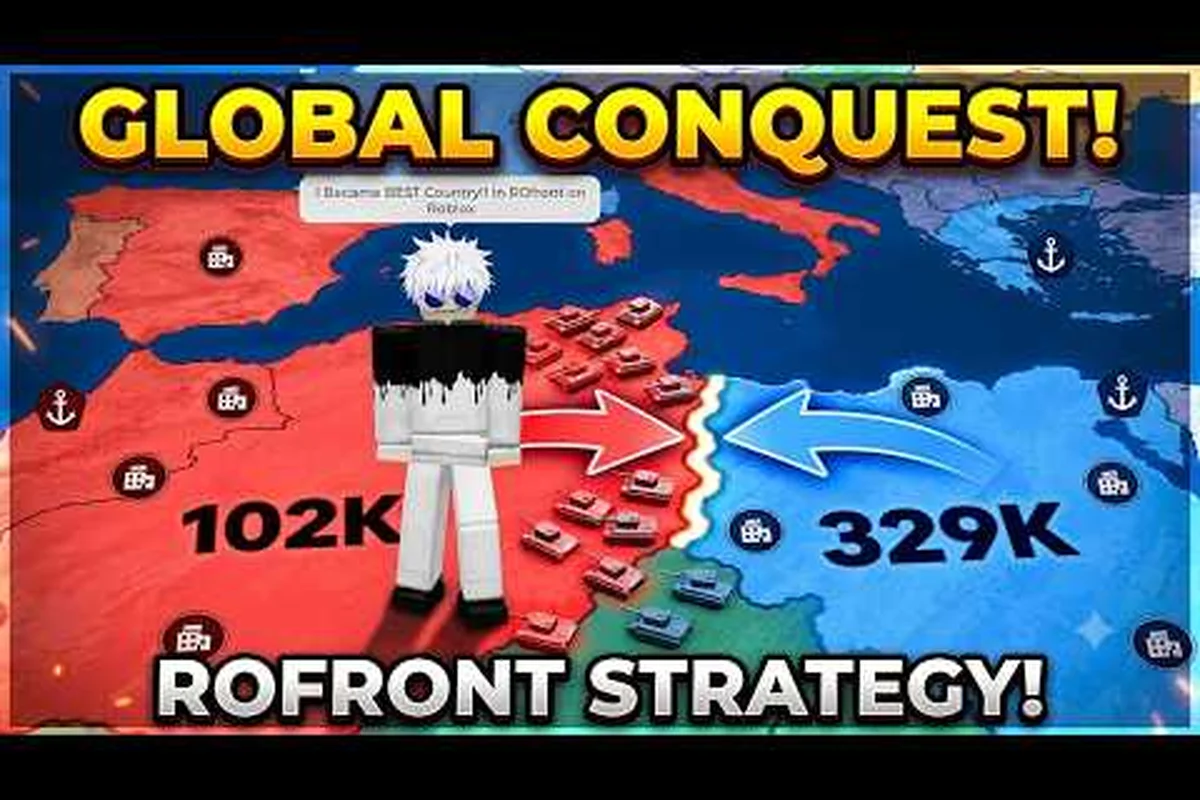
A strong rofront economy guide matters because cities, ports, and factories decide how quickly a nation can afford troops, upgrades, and expansion. This guide lays out an income-first rofront economy strategy: establish a reliable cash base, protect the routes that deliver it, spend only on the bottleneck that limits growth, and convert a healthy treasury into military power without draining the reserve. Use the tables and checklists here to build a budget that survives early raids and funds late-game objectives, whether you prefer peaceful development or a fast conquest push.
RoFront Economy Guide: Build Income Before You Build an Army
A strong rofront economy guide matters because cities, ports, and factories determine whether your nation can support sustained expansion. This guide explains how to earn money, improve production, and turn economic growth into military power without draining your treasury. For example, a coastal city producing 1,000 gold per hour can fund troop recruitment and construction upgrades, while an inefficient factory may consume resources faster than it creates new income. Comparing production output, upgrade costs, and construction queues helps you decide whether to expand infrastructure, specialize resources, or redirect funds toward port and trade improvements.
Start With a Clear Income Plan
The fastest way to improve your position is to treat money as the resource that compounds. A city may provide the foundation of your territory, while ports and factories expand the amount and usefulness of the income you can produce. The official RoFront game page identifies cities, ports, and factories as central parts of the economic loop, alongside alliances and territorial conquest. That means early spending should support production before it supports unnecessary combat.
A practical rofront economy strategy begins with three questions: What is generating income now? Which upgrade removes the current bottleneck? How much cash can you protect while expanding? Answering those questions prevents the common mistake of producing military units faster than your economy can replace them.
| Priority | Early action | Why it matters | Common mistake |
|---|---|---|---|
| 1 | Secure a stable city | Creates a dependable base | Expanding before the base is secure |
| 2 | Develop nearby production | Increases usable output | Spreading across distant territory |
| 3 | Add ports where needed | Improves logistical reach | Building without a clear route |
| 4 | Upgrade factories | Supports stronger production | Buying an expensive upgrade too early |
| 5 | Fund troops selectively | Preserves cash for growth | Attacking every visible target |
The order matters more than a rigid build formula because cities, ports, and factories solve different economic problems. If your city is not generating a dependable cash flow, secure that base before spreading production. When nearby output is strong but routes are limited, improve port access; when factories lack capacity, prioritize the relevant upgrade. Military pressure comes third because troops funded by an unstable economy cannot be replaced efficiently. Keep the core rule: income first, growth second, military pressure third.
Separate Starting Money From Long-Term Growth
Players often confuse two resources in the early game: the cash currently available and the future income produced by your territory. Spending every point of starting cash on troops can make you look powerful for a moment, but it leaves your economy exposed. Saving some cash allows you to react to a raid, finish a production chain, or take advantage of a temporary opening.
A useful split is to reserve part of your income for operations and part for infrastructure. During the opening phase, a conservative approach is to direct roughly two-thirds of available cash toward essential growth and one-third toward immediate military needs. This is not a verified formula from the developers, so treat it as a planning baseline that you adjust as the match develops.
The main benefit is flexibility. When your city or factory is producing steadily, you can commit more money to an attack without abandoning every other system. For broader beginner decision-making, the RoFront beginner strategy guide helps connect early income decisions with territory, combat, and general game progression.
City, Port, and Factory Priorities
Your economic base works best when buildings support one another. Cities provide a central place for control and development, ports help connect your economy across the map, and factories increase production capacity. Community guides frequently recommend placing factories near cities and ports, which suggests proximity and efficient movement are more valuable than spreading every building across distant claims.
The correct building order changes as your nation develops. A new player may need a stronger city foundation, while an established player can use ports and factories to prepare for a larger offensive. Instead of memorizing one universal route, compare the role each building performs in your current economy.
City First for a New Nation
A city is most valuable when it anchors territory that you can actually defend. Starting with several scattered cities may look impressive on the map, but scattered production can become expensive to manage. Concentrating on one city and its surrounding claims usually gives you a clearer economic cycle and reduces the number of fronts where enemy forces can interfere.
Focus on the next upgrade that improves your city’s reliability or output. Before buying it, check whether your funds could instead prevent an immediate loss. If enemy troops are approaching, a defensive purchase may produce more long-term value than another marginal increase in production.
Ports for Reach and Protection
Ports become more useful as your territory expands because they can support a broader network. Their value is not limited to a single production number; a good port layout also helps you move resources or armies between connected areas. Place ports where they reinforce existing routes instead of creating isolated infrastructure that cannot benefit the rest of your network.
Before constructing a port, consider three practical factors: the route it unlocks, the cost of securing it, and the economic role it will perform. A port placed between a productive City and an active front can shorten troop movement while adding a trade hub to the network, but a distant shoreline that demands more Military production than your income can sustain may become a permanent liability. In practical terms, build the port only after identifying which City, Factory, or front it will connect and what measurable income or strategic advantage that connection creates.
-
Distance: It should sit near useful territory rather than in an empty direction.
-
Exposure: A remote port may require more defense than your current economy can support.
-
Purpose: Decide whether it will support trade, troop movement, territorial control, or a combination of these roles.
| Building | Best early role | Strongest placement | Upgrade when… |
|---|---|---|---|
| City | Stable economic base | Near defended central territory | Your base is secure and producing consistently |
| Port | Connect economic regions | Between useful cities and active fronts | A planned route has clear value |
| Factory | Increase production capacity | Near city and port networks | Basic income no longer covers planned spending |
| Military production | Create field pressure | Near sustainable production | Income can survive losses and replacements |
Factories After the Foundation Holds
Factories are powerful because they increase the amount your economy can support, but they are poor substitutes for a weak foundation. If your city is unstable or your port network is poorly connected, extra production may not solve the real problem. A factory is most valuable when it can draw from a dependable local system and feed money or military output back into that system.
Community video discussions also frame factory and anchor upgrades as a genuine budget choice rather than a universal “best upgrade.” That debate reflects a sound economic principle: the strongest purchase is the one that removes your current constraint, not the one with the biggest headline effect.
| Situation | Better economic choice | Why |
|---|---|---|
| Your city is still developing | Improve the city first | A stronger base makes later upgrades safer |
| Your territory is spread out | Add useful port coverage | Connectivity can improve income efficiency |
| Income is steady but too small | Expand factories | More capacity supports larger military plans |
| Your treasury is nearly empty | Delay advanced construction | Major spending can expose the entire economy |
| Enemies threaten your core | Secure the core | Protecting income may provide more value than growth |
How to Get Money Without Overextending
Reliable income comes from building a productive loop and then protecting the time required to use it. The best rofront economy tips are not about finding one magical money source. They are about avoiding interruptions, improving connected infrastructure, and keeping enough cash available to respond to changing threats.
Begin by identifying your main inputs. Watch which city or factory contributes most, whether production is slowing, and where your money is going. If income is lower than expected, diagnose the cause before making a purchase. A factory may be productive, but if its route to the city is exposed, enemy pressure can interrupt the entire chain.
A disciplined money review follows four steps, but the order matters because each stage turns a vague economic problem into a decision you can make: use current cash, income, spending, and recent losses to establish a baseline, then trace the issue to the responsible building, route, or territory. Only after that comparison should you decide whether an upgrade, repair, or defensive change is worth its cost. For example, if a factory’s production route to the city is being threatened, protecting that connection may create more long-term income than buying a cheaper income boost that remains exposed. This measured approach keeps your rofront economy strategy responsive without draining the reserve needed to handle sudden losses.
-
Measure: Check current cash, income, spending, and recent losses.
-
Locate: Identify the building, route, or territory responsible for the problem.
-
Prioritize: Compare the cost of fixing the bottleneck against the value of the upgrade.
-
Protect: Reserve enough money to respond before committing the balance.
This approach turns the rofront money guide into a response system based on observable decisions rather than guesses about which income source will perform best. For example, if a factory is generating steady income but its route to the city is under threat, compare the upgrade cost with the production value exposed before spending. When a match changes quickly, revise the budget according to which building, route, or territory supports the current goal, while preserving enough cash to handle a sudden loss.
Use a Three-Bucket Treasury
Dividing your treasury can prevent one expensive decision from damaging everything else. Use three conceptual buckets: core economy for essential city, port, and factory improvements; military reserve for defense or a clearly worthwhile attack; and flexible capital for opportunities that appear later.
There are no official values for these three buckets, so the proportions should adapt to your situation. A heavily threatened player may keep more in defense, while a stable player can place more into growth. The important result is that every coin has a purpose before it is spent.
| Treasury bucket | Best use | Review trigger |
|---|---|---|
| Core economy | Essential production and transportation | A bottleneck appears |
| Military reserve | Defense and selected attacks | A credible threat emerges |
| Flexible capital | Unexpected opportunities | No urgent expense is pending |
Do not spend flexible capital merely because it is available. Saving part of your income preserves your ability to respond to sudden opportunities, such as buying a resource-producing building, completing a profitable trade route, or reinforcing a distant claim before an opponent can contest it. For example, if your core economy is stable and the military reserve is unused, keep part of the flexible capital unspent until a high-value opportunity appears; otherwise, an unnecessary early purchase can leave you unable to fund either defense or a profitable expansion.
Fast Income Without a Costly Gamble
The rofront how to make money fast question has no single universal answer because server pressure, starting location, and building availability can change the best route. The reliable approach is to improve a working system and remove inefficiencies. A risky strategy may produce a quick spike, but it can also leave your treasury empty and your core exposed.
The strongest rofront fast money guide begins with your city and nearby production. Community experience supports building factories near cities and ports, because a compact network reduces the gap between generating income and using it. It also makes expansion easier to finance without relying on a distant, fragile operation.
Choose Speed, Safety, or Scale
Different moments call for different economic priorities. Early speed emphasizes immediate cash and low-risk claims. Safety emphasizes defense and stable routes. Scale emphasizes factories and wider networks for later military power. Trying to pursue all three at once often results in spending money in the wrong order.
| Economic goal | Best action | Best time to use it | Main risk |
|---|---|---|---|
| Immediate speed | Improve the nearest productive area | Opening minutes | Overcommitting cash |
| Stability | Strengthen a central city and route | After the first expansion | Spending without a return path |
| Scale | Add factories and useful port coverage | Mid-match | Slow payoff |
| Military surge | Convert stable income into troops | Before a planned offensive | Losing the reserve too soon |
| Recovery | Rebuild after losses | After the threat is contained | Retreating into passive play |
This comparison is a framework rather than a promise of exact earnings. RoFront’s official page describes a shared world of 88 player nations and hundreds of tribes, and the world’s pace can change with player behavior. Income values and build costs may also vary by version, so confirm the numbers displayed in your server before committing your budget.
Avoid False Speed
False speed is spending heavily for a small immediate benefit while damaging a larger system. Examples include claiming distant land before securing the center, upgrading factories without a nearby economic route, or consuming the military reserve for a fight that does not protect income.
Community reports from the Radex Tips economy-first video recommend earning money quickly and using it to support strategy. The broader lesson is sound: money has a stronger purpose when it funds your next territorial step instead of merely increasing a temporary score.
Turn Economic Strength Into Military Expansion
A strong economy should support measured expansion, not an uncontrolled spending spree. Before sending an attack, determine how the target supports your wider strategy. Capturing a contested resource route may be valuable, but occupying distant land that costs more to maintain than it produces can be a false gain.
The troop sending guide provides deeper information about choosing attack sizes and committing troops. For economy purposes, the key question is simpler: can your income replace the troops you expect to lose? If not, favor a smaller operation, improve your position, or wait for a stronger income window.
Match the Offensive to the Income
A large attack makes sense when several conditions line up. Your core economy is secure, your treasury can survive an unfavorable engagement, and the target contributes meaningful strategic value. A smaller attack is usually wiser when your income is still developing or your border is unstable.
| Pre-attack condition | Green light | Caution |
|---|---|---|
| Treasury | Enough for deployment and a reserve | Empty after recruitment |
| Core territory | Secure from immediate counterattack | Under active pressure |
| Target value | Improves income, route, or defense | Isolated and low-impact |
| Timing | Production and income are rising | Spending right after losses |
| Support | Nearby allies or secure routes | No reinforcement path |
Alliances can protect economic growth, but they should not substitute for sound budgeting. If your plan depends on a partner covering a vulnerable route, coordinate before committing funds. The RoFront diplomacy guide explains how alliances can support wider strategy and how to evaluate the terms of cooperation.
Reinvest Some Gains
A portion of successful expansion should return to the economy. New territory may add value only after roads, cities, ports, or factories connect it to your main network. Set aside part of the reward and look for the next bottleneck rather than assuming every new claim is automatically productive.
This reinvestment habit produces a clearer growth cycle because every gain can strengthen a specific operational bottleneck instead of disappearing into a general resource pool. For example, if a new border region generates income but lacks transport links, reserve part of that income to upgrade the connecting road or port; if the region is secure but strategically exposed, reinvest in city defense or troop capacity. The key is to compare the new area’s contribution with the cost of connecting and defending it, then direct the surplus toward the next constraint. This creates compounding returns: infrastructure raises output, additional output funds the next expansion, and stable income can later support military pressure without requiring a complete restart.
-
Expand into a useful area.
-
Secure the claim and connect it to existing infrastructure.
-
Measure the new income or strategic benefit.
-
Reinvest a portion into the next bottleneck.
-
Recycle stable returns into military pressure or further expansion.
This reinvestment cycle makes a rofront economy strategy more resilient than a simple earn-recruit-attack loop because each claim changes what your cities, roads, ports, and factories can sustain. The decision rule is practical: expansion should improve production, protection, or power projection. For example, a border city connected by a new road may increase regional income and troop supply, while an exposed port may justify fortification before the next campaign. Comparing the new area’s revenue and strategic value against connection, defense, and maintenance costs prevents short-term gains from consuming the capital needed for the next expansion.
Match Your Strategy to the Match Stage
Every rofront economy strategy should adapt as the world changes. The opening is about establishing dependable production, the middle is about selecting high-value growth, and the endgame is about using accumulated strength efficiently. A build that works in one phase can become wasteful in another because the surrounding threats and opportunities have changed.
Opening Phase: Establish Production
Begin with a compact, defensible economy. Secure your starting city, identify the most useful nearby production, and keep a reserve for defense. Expansion beyond the immediate area is reasonable when it adds a clear route or resource, but it is risky if your core still needs attention.
Community advice in the NoobBlox economy videos favors saving troops early, sending roughly 1,000 troops to claim unclaimed land, and avoiding early fights with real players. Treat these as community-reported strategies rather than fixed rules, because server conditions may differ. The transferable principle is to limit commitment while the economic foundation remains fragile.
| Opening goal | Action | Resource saved |
|---|---|---|
| Secure the core | Defend the main city | Military reserve |
| Improve output | Upgrade the productive city or factory | Upgrade funds |
| Extend carefully | Claim nearby useful land | Troop capacity |
| Learn the world | Observe borders and production routes | Optionality |
Middle Phase: Select High-Value Growth
The middle phase is where spending discipline separates stable players from inconsistent ones. Upgrade the system that constrains your largest plan, not the system that merely looks advanced. If factory output is sufficient but your port route is weak, a port may create more usable income than another factory.
Compare each proposed upgrade against three alternatives: defend the core, recruit troops, or save. It may be enough to make one meaningful investment at a time because spreading your cash across several small upgrades can create an underdeveloped economy with no clear advantage.
Late Phase: Convert Reserves Into Results
Near the end, cash that remains idle has limited value. The objective shifts toward securing decisive objectives, protecting income-producing territory, and using nuclear or conventional force where it changes the outcome. Planning is still required because a final offensive that fails can expose both your treasury and your core.
The RoFront nuke strategy guide covers the military considerations for these high-impact decisions. Keep the economic test beside the tactical one: does this strike enable territorial control that improves your position, or does it merely destroy a target without replacing the resources it produces?
| Late-game state | Best money move | Strategic goal |
|---|---|---|
| Large reserve, stable border | Fund a decisive operation | Acquire high-value territory |
| Strong production, weak defense | Reserve for defense | Protect the economic core |
| Weak production, large territory | Consolidate infrastructure | Make claims worthwhile |
| Many enemies, limited cash | Focus one front | Avoid scattered losses |
A clear late-game budget also prevents accidental overspending. Set a ceiling before purchasing, leave a defense reserve unless the match is effectively decided, and reassess after major losses. The goal is not to spend every coin; it is to allocate enough to secure a meaningful advantage.
Common Economy Mistakes and Corrections
Even a sound plan can fail when priorities shift. Recognizing mistakes early prevents a temporary deficit from becoming a collapse. Most problems come from spending based on appearance, expanding without a maintenance plan, or treating treasury size as a score rather than a tool.
Mistake One: Expanding Too Thin
Land far from your economic center may look impressive but produce little if you cannot defend or connect it. Before claiming a distant area, estimate the resources required to defend it, build a route, and bring its output into your network. If those costs exceed the likely benefit, claim less and consolidate first.
Mistake Two: Upgrading Everything
Many small upgrades can feel productive while failing to transform your economy. A balanced plan may be more effective. Choose one priority, such as stronger city output, then allow it to operate before selecting the next purchase. This approach preserves cash and makes it easier to identify what worked.
Mistake Three: Spending the Last Reserve
Your reserve is what protects a setback. Once it disappears, a single raid can interrupt production and force emergency borrowing or unit loss. Keep enough cash to stabilize the core, especially when opponents are active. Military purchases are safer when your income continues during the operation.
Mistake Four: Treating Community Advice as Fixed Math
Community videos and player reports are useful for identifying patterns, but they are not official balance rules. A suggestion to send around 1,000 troops may make sense in one situation and fail in another. Always check current server conditions, building availability, and the value of your target.
| Mistake | Early warning sign | Correction |
|---|---|---|
| Expanding too thin | Several distant claims lack a route | Consolidate near the core |
| Upgrade drift | Many half-finished projects | Finish one priority first |
| Empty reserve | Every purchase requires a raid | Delay nonessential spending |
| Copying fixed troop amounts | A recommendation ignores enemy size | Compare risk, value, and support |
| Ignoring production | A claim exists but adds little | Connect it to city and port networks |
A Practical Checklist for Every Match
A short checklist can keep your economy from drifting. Review it after the opening, whenever an attack is planned, and after major losses. The aim is not perfect efficiency; it is to ensure that spending, saving, and expansion continue to support one another.
Every Five Minutes
-
Check cash, production, and the rate of change.
-
Identify any city, factory, or route that is underperforming.
-
Confirm that your core has enough defense to discourage a raid.
-
Look for an upgrade that removes a visible bottleneck.
-
Avoid spending the entire treasury simply because new content is available.
Before a Large Attack
-
Verify that your core is not under immediate threat.
-
Compare the target’s value with the expected troop loss.
-
Keep a reserve unless the match situation makes it unnecessary.
-
Choose a target that supports income, logistics, or defense.
-
Confirm that allies, if involved, understand their role.
After Significant Losses
-
Stop reactive spending until the cause is understood.
-
Repair or protect the most important income source.
-
Rebuild the military reserve gradually.
-
Review whether the failed action was affordable.
-
Return to the upgrade plan only after stabilization.
This checklist reinforces the most durable rofront economy strategy: measure income and spending, protect the primary money source, then fund the highest-value bottleneck. For example, if military upkeep is draining the treasury, compare its reserve cost with the income generated by the main production building before committing to another upgrade. A deliberate purchase has a defined return or defense purpose, so the treasury can rebuild without repeating the same overspending mistake.
Frequently Asked Questions
What is the fastest way to earn money in RoFront?
Improve a productive city or factory that already has a secure route to your economic network, then reinvest part of the returns into the next bottleneck. Speed comes from reliability as much as raw income, so avoid distant or exposed projects that can be raided before they mature.
Should factories be built near cities and ports?
Community guides commonly recommend placing factories near cities and ports, which supports efficient connections and easier defense. The exact building rules may vary by version, so confirm current placement requirements in the game, but a compact and protected production network is generally easier to manage.
How much money should I save before attacking another player?
Keep enough to cover deployment, likely losses, and protection of your core economy. A practical baseline is to reserve roughly one-third of available cash for military needs early, then adjust according to threats and income. If an attack empties your reserve, it may be too large for the current stage.
Is expanding territory always economically beneficial?
No. Territory is valuable when it adds production, improves routes, or strengthens defensible positions. A distant claim that requires more resources to maintain than it generates can weaken your economy. Secure and connect new land before treating it as a useful economic asset.
Should I buy factory or anchor upgrades first?
Choose the upgrade that addresses your current bottleneck. Factory capacity is useful when income and connections are stable, while an anchor may provide greater immediate value when border stability is the problem. Community discussions treat this as a situational choice, so base the decision on your current shortages rather than a universal rule.