
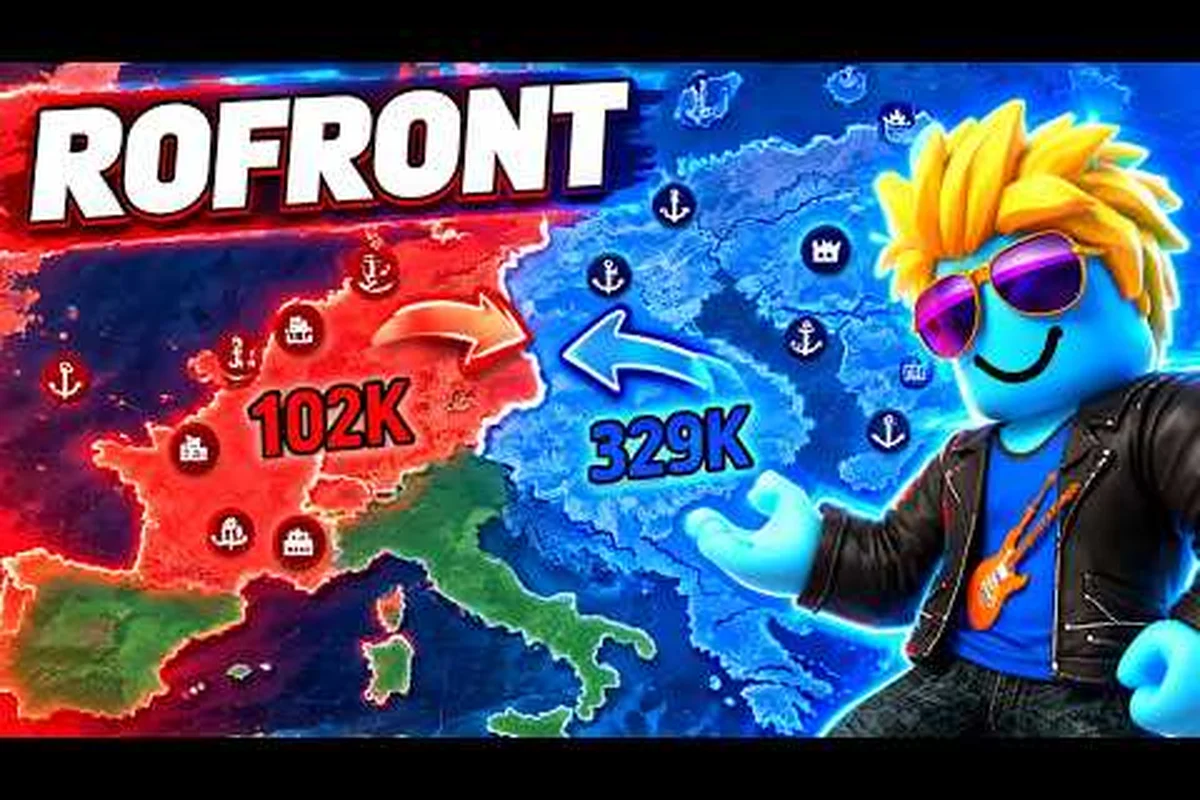
Diplomacy in RoFront can secure borders, unlock cooperation, and create room to expand on the shared world map. This rofront diplomacy guide explains how to identify useful partners, avoid bad commitments, and negotiate from strength. Evaluate each prospective ally through wartime behavior, territorial pressure, and willingness to honor a Diplomatic Pact before dividing rewards. For example, an alliance with a faction that repeatedly skips joint defense may offer access to resources but leave your borders exposed; a smaller ally that holds a strategic passage can be more valuable if both sides define who controls it after victory. A Non-Aggression Pact can buy time to train forces, while a Trade Agreement can reduce resource scarcity and stabilize a vulnerable front.
What Makes RoFront Diplomacy Valuable?
RoFront places many player-controlled nations on one real-time map, so alliances influence more than reputation. A dependable partner can cover a vulnerable border, support a joint attack, or share a valuable window of peace while you consolidate territory. The official RoFront game page describes a shared conquest map with 88 player nations and hundreds of tribes, making relationships a meaningful strategic layer rather than cosmetic dialogue.
A useful alliance should solve a problem that matters to you. That might be stopping a powerful neighbor from taking a nearby city, protecting a trade route, or dividing distant targets during a larger offensive. Without a clear purpose, an alliance can consume attention, create obligations, and turn a manageable conflict into a complicated multi-front war.
The Core Diplomatic Assets
Think of diplomacy as a system built from three assets: information, credibility, and time. Information reveals another player’s position and pressure points. Credibility makes that player believe your promises will be honored. Time allows both sides to act before the map changes around them.
| Diplomatic asset | What it provides | How to build it |
|---|---|---|
| Information | Knowledge of borders, armies, and commitments | Observe territories, compare public activity, and share useful warnings |
| Credibility | Confidence that agreements will be honored | Make small promises first and avoid surprise attacks |
| Time | A shared opportunity to act | Coordinate a deadline around a visible target or threatened region |
| Leverage | Ability to influence another nation’s choices | Control useful territory, offer a clear benefit, or make a threat credible |
| Distance | Protection from sudden retaliation | Favor partners whose strong regions are far from vulnerable lands |
The strongest approach treats every relationship as a continuing evaluation rather than a permanent friendship. A dependable ally at one stage of the match may become a dangerous competitor later. Likewise, a former enemy may be the most valuable partner when both sides face a greater external threat.
Questions to Ask Before Partnering
Before committing, determine what the proposed ally wants and how its priorities compare with yours. A shared border threat may justify a defensive pact, while a demand for territory on your side of the map can turn a useful alliance into a costly contest over resources and troop access. For example, if the potential partner wants a staging area near your economy, weigh that benefit against exposure to betrayal; enthusiastic promises matter less than their army, economy, and current alliances.
Useful questions include identifying the ally’s immediate threat, its current alliances, and whether its requested support would improve your economy or troop access without creating a new front. For example, a partner seeking a defensive pact against a shared border threat may be valuable, while an ally demanding a permanent base near your economy can expose your resources and supply lines to betrayal. Compare their army strength, economic capacity, and existing commitments before promising troops or territory, because enthusiastic declarations alone do not establish a reliable alliance.
-
Which borders are they worried about right now?
-
Do they need help attacking, defending, or simply surviving?
-
Are they likely to remain neutral if their current partner turns against them?
-
What can you offer that does not weaken your own position?
-
Can both sides complete the commitment before the map forces a decision?
-
Is there a shared enemy, or only a temporary disagreement?
Community beginner reports also frame territory, economy, troops, and alliances as connected parts of winning, rather than treating diplomacy as a separate menu choice. The RoFront beginner strategy overview is useful if you need to balance relationship-building with early economic and military development.
RoFront Diplomacy Strategy: Choosing Allies Carefully
The best ally is not always the strongest nation. A smaller partner may occupy a strategically important border, offer easier coordination, and have fewer competing commitments. A much larger nation can provide impressive support, but it may also treat smaller partners as expendable tools. Compare strategic value, not just visible power.
Comparing Alliance Candidates
| Candidate profile | Advantages | Main risk | Best diplomatic use |
|---|---|---|---|
| Border guardian | Covers a weak flank | May demand too much support | Defensive coordination and mutual warnings |
| Nearby rival | Understands the local threat | Could switch sides quickly | Short-term joint defense |
| Distant power | Brings larger strategic weight | Has little local incentive to help | Pressure against a common enemy |
| Resource-rich neighbor | Supports joint operations | May compete for the same ports or cities | Trade support and timed expeditions |
| New but reliable player | Often values cooperation highly | Limited defensive capacity | Early mutual defense and regional growth |
| Opportunistic ally | Can create quick advantages | Unpredictable when risks rise | Limited, reversible commitments |
The distance factor is especially important. A partner across the map may be less likely to threaten your territory during a successful campaign. That does not make distance automatically safe, because a shared opponent can draw both sides toward the same front, but it can reduce the chance that immediate success creates a border crisis.
A rofront alliance strategy should also separate capability from reliability. A large army can change a battle, while a dependable warning can prevent one. A partner who communicates early, keeps commitments small, and shares useful intelligence may therefore create more value than a more powerful player who communicates only when demanding action.
Assess the Relationship’s Direction
Before approaching a nation, classify the proposed relationship by comparing the resources each side contributes, the risks it accepts, and the advantage it expects to gain. In RoFront diplomacy, an alliance should therefore be evaluated through the alliance guide lens: note whether a faction provides troops, supplies, intelligence, or safe access, and whether that support is reciprocal or dependent on continued aid. For example, a trade-and-protection compact may stabilize a border, while a promise of temporary military support can leave one side exposed if the partner withdraws after an enemy attack. Identifying the intended direction—cooperation, dependence, truce, or rivalry—before negotiations helps prevent commitments that look balanced on paper but transfer the real cost to only one faction.
-
Mutual benefit: Both sides gain protection or access without handing the other a decisive advantage.
-
One-way support: One side receives help while the other carries most of the risk.
-
Conditional cooperation: Both sides act together only if a specific enemy attacks.
-
Temporary truce: Hostilities stop now, but each side retains freedom to act later.
-
Directed rivalry: One side is being weakened to benefit the other.
The best outcome is usually mutual benefit, because neither participant needs to deceive the other to keep the arrangement working. One-way support may be acceptable for a short operation, but it should not become the default relationship. If the arrangement cannot survive without constant reassurance, the underlying terms are weak.
Make Small Commitments First
A reliable first agreement is easier to judge than a sweeping promise. Mutual non-aggression in a distant region, advance warning about movement, or a single coordinated attack can reveal whether the partner communicates and follows through. Small tests also preserve your options if map conditions change.
This rofront diplomacy strategy works because it turns trust into evidence. Track three things after every exchange: did the partner respond on time, did they honor the stated scope, and did they share accurate information? Those observations are more valuable than flattering messages.
When a small commitment succeeds, expand the arrangement deliberately rather than immediately requesting a full alliance. For example, convert one successful mutual non-aggression agreement into advance warning before troop movement, then evaluate whether the partner limits that cooperation to the agreed front. Use the alliance strategy overview to compare partner types and assess conflict-entry decisions, because a useful ally on one front can become a liability when your territorial priorities shift. Entering a coalition should therefore preserve optionality, while leaving one should account for prior breaches, shared border pressure, and the strategic value of the partner’s current position.
Forming Alliances Without Losing Flexibility
Knowing how to form alliances matters, but knowing when not to sign one matters just as much. Every commitment narrows your future choices on a map where borders shift quickly. Approach negotiations with a clear proposal, a defined duration, and an exit condition rather than accepting an open-ended promise.
A Four-Step Negotiation Plan
| Step | Action | Result |
|---|---|---|
| 1. Identify the need | Define the border, target, or threat requiring help | Keeps the request focused |
| 2. Match incentives | Offer something the partner values | Creates reciprocal value |
| 3. Define boundaries | State where, when, and how the commitment applies | Limits accidental escalation |
| 4. Review the result | Reassess after success, failure, or changed priorities | Prevents stale alliances |
The strongest proposal sounds simple: “Our borders are threatened, so we warn each other if either side sees an attack,” or “We target the same eastern city, and neither party claims it without agreement.” Specific terms reduce ambiguity because players can remember what was actually promised.
Avoid vague commitments such as “always help each other” or “we are friends now.” They sound generous but leave unclear what happens if one side is invaded elsewhere, loses a major city, or changes leadership priorities. Better agreements specify the target, region, trigger, and expected response.
Terms to Clarify Before Committing
Clarify the trigger, such as an attack on a named border region or a request for troops. Clarify the expected response, whether it is one warning, a defensive deployment, or a joint attack. Clarify the duration, because a commitment made during one crisis may be irrelevant after several turns.
Also establish the territorial rule. If you conquer shared territory, who keeps it? If one side fails to participate, can the other act alone? These questions are especially valuable when a joint attack succeeds quickly, because unexpected success can make a previously fair arrangement contentious.
Flexible without being vague is the key phrase. A good agreement has a clear present purpose, but it can be reviewed when the strategic landscape changes. For example, an alliance triggered by a border-region attack can expire once that threat is neutralized, freeing both allies to renegotiate a new joint operation against another faction. This prevents a temporary alliance from dictating the entire match while preserving clear triggers, expected responses, and duration for the next campaign phase.
RoFront Diplomacy Tips for Wars, Peace, and Betrayal
Diplomacy is most useful when a crisis makes relationships consequential. Yet the same map pressure can produce rushed promises, misread intentions, and destructive cycles of revenge. A calm response does not mean passivity; it means preserving options while pressure is high.
When War Becomes the Better Choice
Sometimes cooperation has more value than another round of negotiations. War may be appropriate when a partner repeatedly violates clear agreements, seeks territory you need for survival, uses your aid against you, or is likely to become an overwhelming threat if left unopposed.
Before declaring war, check three conditions. First, confirm that your objective is specific, such as removing a border threat or capturing a city, rather than a vague desire for revenge. Second, make sure your economy and army can support the objective, because an extended conflict without a clear payoff can consume your position. Third, consider whether declaring war changes anyone else’s behavior, because a third party may exploit the distraction.
This decision is part of your overall RoFront troop-sending strategy. A military push is stronger when its timing, target, and diplomatic purpose match. If you plan to attack a specific border, coordinate that intention with an ally rather than leaving your partner to react as if the offensive were surprise.
When Peace Is the Better Choice
Peace is not a surrender. It is useful when the immediate frontier is secure, your economy needs time to recover, or a larger opponent benefits from continued conflict. A negotiated pause can also prevent two exhausted nations from being ground down by a third party.
When considering peace, define what each side expects to happen during the pause. If borders remain unchanged, say so. If troop movements near a shared border are restricted, specify which region and what counts as a violation. If the agreement only needs to last until a particular event, identify that event clearly.
A peace deal should also avoid creating a future trap. A pause that allows one side to rebuild for a guaranteed later assault is not true stability. Better terms exchange concrete restraints or mutual non-aggression, and they are easier to defend publicly if either side claims the other violated the spirit of the deal.
Responding to Betrayal
Betrayal damages more than territory. It can make every remaining ally doubt your agreements. When a partner breaks a commitment, preserve evidence of the terms, stop making new promises immediately, and decide whether the breach changes the entire relationship or only one operation.
Three response patterns are usually available, and the choice should reflect both the breach’s scope and the alliance’s remaining value. If a partner repeatedly delays support or violates a trade pact, an alliance reset can restore coordination without demanding an unprofitable feud. Conversely, if the betrayal reveals a fundamental mismatch in objectives, strategic separation may free your faction’s resources and prevent one unreliable ally from compromising every other commitment.
| Response pattern | Best when | Main advantage |
|---|---|---|
| Limited retaliation | The breach was serious but localized | Restores deterrence without creating a regional war |
| Alliance reset | Both sides still need each other | Replaces a damaged arrangement with clearer terms |
| Strategic separation | Trust is broken or objectives have changed | Preserves resources and protects other commitments |
Avoid automatic retaliation: one missed warning does not justify demanding total surrender if a useful partner could instead be pushed into another alliance. In a rofront alliance, calibrated consequences—such as suspending a trade commitment, reducing support, or enforcing a clearly stated warning—preserve leverage while keeping the wider diplomatic map available. For example, if an ally misses a single defense commitment, revoke one cooperation bonus before breaking the alliance; demanding unconditional cession may turn a recoverable breach into a permanent enemy and disrupt your faction’s regional positioning.
Coordinating With Allies Across the Map
An alliance becomes real when players can coordinate territory, timing, and intent. Chat helps, but concise operational markers are more reliable. Name the target, identify the approach, and state the moment when action should begin. Ambiguity is the source of many accidental collisions.
Set Primary, Secondary, and Fallback Objectives
A practical plan needs a primary objective, a secondary objective, and a fallback objective. The primary target is the place you intend to affect. The secondary target diverts attention or rewards control elsewhere. The fallback handles a failed opening or an unexpected enemy response.
| Coordination element | Clear format | Why it prevents mistakes |
|---|---|---|
| Target | Name the city or region | Aligns movement |
| Timing | State the start condition | Prevents early or late action |
| Roles | Divide attack, defense, and reserve duties | Stops duplicated effort |
| Signal | Agree on a visible cue | Confirms readiness |
| Exit | Define withdrawal or regroup conditions | Limits losses after failure |
Roles matter because two allies moving the same army toward the same target may waste capacity. One can lead the main attack, another can cover the rear, and the third can watch a vulnerable border. This creates a more resilient campaign than simply sending every available troop to one point.
A broader RoFront economy guide can help you determine whether an alliance is sustainable. If funding a joint operation prevents you from maintaining cities, factories, or ports, the deal may be strategically attractive on paper but weak in practice. Sustainable cooperation preserves the resources required to honor it.
Share Warnings, Not Just Opportunities
Allies become more valuable when early warnings prevent avoidable losses, especially when a report reaches them before their forces commit to a dangerous move. For example, sharing evidence that an enemy convoy is approaching a border outpost can let an ally reposition defenses, conserve fuel, or postpone an attack that would otherwise expose its rear. The intelligence need not be perfectly confirmed: a credible sighting of hostile movement, a threatened border, or a likely target still gives a partner time to adjust. In practical terms, label the affected map area and explain whether the threat is immediate or developing, so the ally can choose between reinforcing the position, redirecting a patrol, and holding its current formation. This proactive intelligence exchange builds trust because it demonstrates that the alliance is a dependable source of tactical support rather than merely a source of favorable opportunities.
A good warning contains three elements: a clear map location, the observed direction of movement, and a confidence level that distinguishes confirmed intelligence from a doubtful sighting. In a rofront alliance, these fields let an ally act proportionately: a confirmed threat to a border outpost may justify reinforcing that position immediately, while an uncertain sighting should trigger observation before committing fuel or exposing a patrol. Including the affected map area and threat urgency also prevents confusion when several fronts are active, preserving the alliance’s credibility and reducing the risk of an expensive response to incomplete information.
-
Location: Where the movement or threat was observed.
-
Direction: Where it appears to be going.
-
Confidence: Whether the report is confirmed or uncertain.
This structure reduces panic while preserving trust. Confirmed intelligence can trigger immediate defensive action, whereas a doubtful report should prompt observation rather than an expensive response. Clear confidence levels also protect the alliance from appearing careless. For instance, if a patrol spots enemy armor moving toward a border outpost, tag the sighting as confirmed and note the route before requesting reinforcements; a distant or obscured sighting should instead be marked uncertain and monitored for a second report. This distinction lets the ally match its response to the evidence, conserving fuel and patrol safety while still rewarding timely, credible warnings.
A Practical RoFront Diplomacy Playbook
A strong rofront diplomacy guide should end with repeatable decisions, not vague advice. Review relationships at fixed points and record the last concrete action you took with each important nation. The objective is to prevent old assumptions from surviving after the map has changed.
Weekly Review Checklist
Use a simple relationship ledger with one row per important nation, adding separate entries for the contact nation, your own position, and the strongest third-party power affecting that frontier. Track each relationship’s current stance, shared objective, last promise, fulfillment status, relative strength, and next review trigger. For example, if a trade partner has twice delayed a supply agreement, record both missed deadlines and the territory that would open if the deal succeeds; this makes Maintain, Test, and Oppose decisions evidence-based rather than temporary reactions to a single capture or alliance announcement.
| Field | What to record |
|---|---|
| Relationship | Ally, neutral, rival, or uncertain |
| Shared objective | Territory, defense, trade, or survival |
| Last promise | Exact commitment made or accepted |
| Evidence | Whether it was fulfilled, delayed, or broken |
| Current value | What the nation controls or can threaten |
| Next review | Trigger or time for reassessment |
Review after a major city capture, a broken agreement, a new alliance announcement, or a substantial change in relative strength. A weekly review is also useful for quieter matches, but map events should trigger an immediate reassessment when they alter the risk level.
Use three labels for priorities. Maintain applies to reliable allies whose goals still align with yours. Test applies to uncertain partners with potential value; begin with a small, reversible commitment. Oppose applies to nations that repeatedly threaten you or benefit from your weakness.
The Three-Stage Relationship Plan
-
Observe: Watch borders, actions, and interactions before spending political capital.
-
Test: Offer limited cooperation and compare words with results.
-
Commit: Expand only when the relationship has produced consistent value.
This process makes alliances more resilient because it prevents you from making an enormous promise based on a single friendly exchange. It also makes peace easier to evaluate, because a former enemy can move through observation and testing without demanding immediate trust.
How to Make Allies Without Becoming Dependent
Avoid making your economy, defenses, or main offensive fully dependent on one partner. Keep a reserve, maintain relationships with more than one nation, and retain the ability to operate alone. A reliable ally should multiply your options rather than become the only source of safety.
This does not mean distrusting everyone. It means building a base that can absorb one broken commitment. When your position remains stable, partners approach you because you can offer useful support. When every decision waits for approval from another player, your diplomacy becomes reactive.
Frequently Asked Questions
How should I choose an ally in RoFront?
Choose an ally whose location, capabilities, and current goals complement your needs. Look for shared borders, a common enemy, or complementary strengths, then verify reliability with a small commitment. A powerful nation is not automatically a good partner if its interests conflict with yours or if it expects too much support.
When should I make peace in RoFront?
Make peace when the immediate threat is manageable, your economy needs recovery, or continued conflict would benefit a stronger third party. Define the pause duration, troop restrictions, and territorial expectations clearly. Revisit the agreement if either side captures major territory or forms a new partnership.
How do I form alliances without losing control of my strategy?
Keep every commitment limited to a clear objective, trigger, region, and duration. Begin with mutual warnings or one coordinated action before making a broad promise. Maintain independent income, troops, and relationships so your plans remain possible even if the alliance changes.
Is it dangerous to trust an enemy of another nation?
Opposition can create a natural reason to cooperate, but former enemies require careful testing. Share small benefits, observe whether promises are honored, and clarify rules for shared territory before attacking a common target. Aligning interests temporarily does not guarantee long-term loyalty.
What are the best diplomacy tips when a partner breaks an agreement?
Confirm what was agreed, stop making new commitments, and assess whether the violation is isolated or systemic. Choose a limited consequence, a formal reset, or strategic separation based on the value of the relationship. Retaliation should protect your position rather than become revenge that drains resources.