
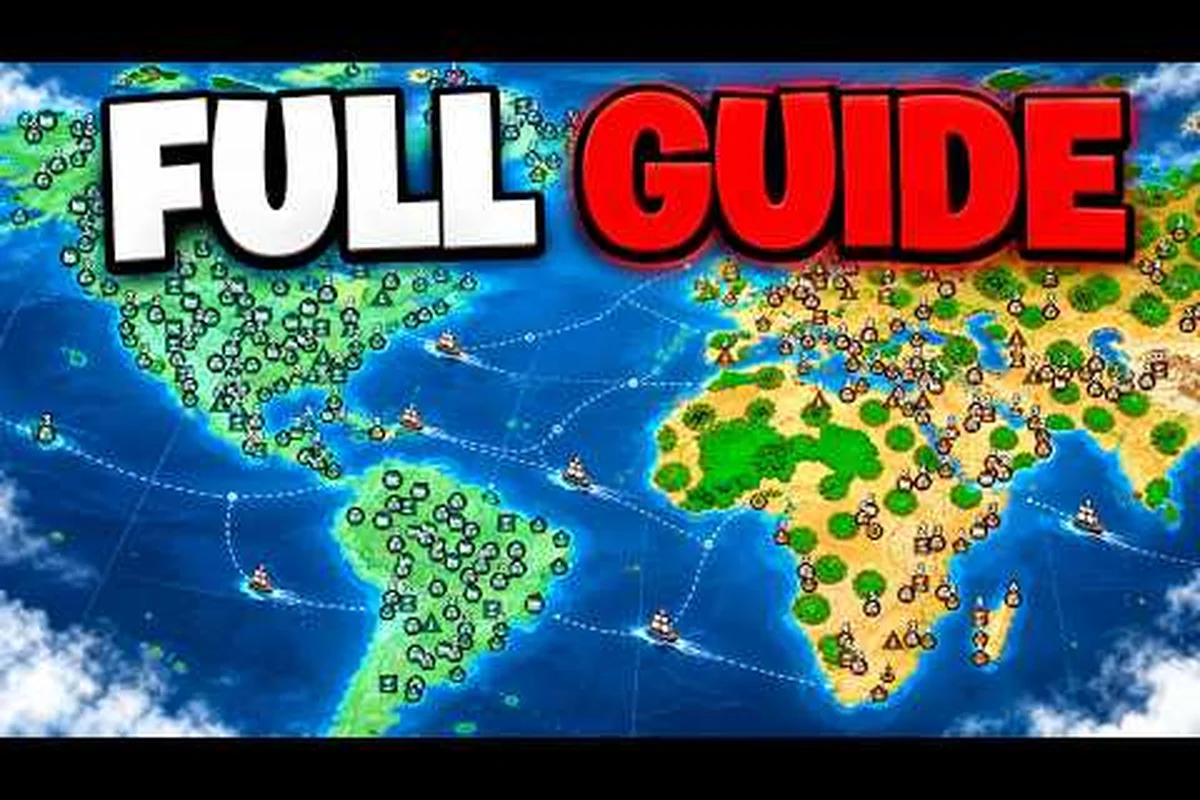
RoFront update highlights matter because the game has changed more in its first month than a typical launch: the official page records a September 26 creation date and an October 24 refresh, yet no public changelog exists. This guide gathers the verified timeline, the signals that suggest balance shifts, and a repeatable patch-detection routine you can run without official patch notes — so you can judge whether economy, factory, military, or nuke priorities have moved in the current build, and which claims deserve the confirmed label instead of community rumor.
RoFront Update Highlights: A Rapid First Month
RoFront update highlights matter because the game has already shifted during its first month, with the official page showing creation on September 26 and a last update on October 24. Get the verified timeline, likely meta changes, and practical ways to judge what changed without a public patch log.
The official Roblox page tracks roughly a month of rapid change since its September 2026 debut. The core loop still centers on live territorial conquest across a single communal map: start with one nation, push outward, battle neighboring states, raise urban and industrial structures such as cities, ports, and factories, form partnerships, and hold a nuclear option in reserve for breaking a stubborn front. The listing adds that the field can include 88 rival nations plus countless tribal groups, and that seizing four-fifths of the map is what ends a match.
That foundation helps explain why update timing matters so much. A factory that feels efficient in week one may no longer match the current economy, while a border strategy based on outdated troop values can leave a player exposed. The RoFront launch timeline provides useful context, but the absence of a public changelog means players must also read the game page, watch balance behavior, and track community reports.
| Verified timeline item | Available information | Why it matters |
|---|---|---|
| Game page created | September 26, 2026 | Establishes the start of the public launch timeline |
| Page last updated | October 24, 2026 | Confirms at least one major refresh near the end of the first month |
| Public patch notes | Not listed | Players cannot rely on a conventional itemized changelog |
| Core win condition | 80% world control | Ensures balance changes still support a territorial race |
| Server capacity | Up to 55 players | Influences diplomacy, alliances, and front coordination |
RoFront Recent Changes: What the October 24 Refresh Confirms
The October 24 date proves that the official listing changed during RoFront’s opening month, although the page alone does not identify every modified troop, building, weapon, or point value. That distinction is essential: a changed page timestamp confirms an update, not the exact balance numbers behind it. The safer conclusion is that current patch behavior may differ from early-launch community advice.
The same page snapshot showed approximately 20.8K concurrent players, more than 52.9K favorites, and over 43.6 million total visits when checked on October 25. These are platform-level indicators rather than gameplay statistics, but they demonstrate the scale of the population exposed to the latest changes. A balance adjustment made for a busy launch population may have a different effect once the player base and matchmaking behavior settle.
| Observable | Snapshot | Interpretation |
|---|---|---|
| Total visits | 43.6M+ | The game has received substantial early exposure |
| Favorites | 52.9K | Many players have marked interest in future sessions |
| Concurrent players | About 20.8K | Live sessions are large enough for meta shifts to spread quickly |
| Server size | Maximum 55 | Alliances and battles can involve many participants at once |
| Page timeline | Sept. 26–Oct. 24 | The first month included a confirmed official refresh |
Community discussion remains useful when it is treated as observation rather than hard evidence. A Google-indexed beginner thread on r/Roonby emphasizes territory control, economic development, troop training, and direct conflict, while also warning that community data may lag current balance changes. Those broad priorities have not been displaced by the October refresh, but their relative payoff may have shifted.
For a timeline of page dates and verification details, the RoFront update history offers the clearest starting point. It is more reliable than an unofficial changelog because the Roblox listing supplies the dated source. Players should treat anything not visible on the page—exact damage multipliers, income rates, build costs, or cooldown values—as version-dependent until confirmed in-game.
RoFront Update Signals: Balance Shifts Without Official Notes
The clearest rofront recent changes are the confirmed October 24 page refresh and the way the live population can expose balance problems faster than a small test server. Without published numbers, players need to identify patterns through repeatable matches. One defeat is not proof of a nerf; a consistent loss of resources, tempo, or territory under otherwise similar conditions is stronger evidence.
The community’s recurring beginner advice—develop an economy, train troops, and fight neighboring nations—still describes the basic strategic loop. A meaningful balance shift would appear if the same plan consistently fails at a different stage. For example, early-income builds may have lost their advantage if construction or unit costs increased, while players who bought upgrades with points may feel a correction if point conversion or upgrade value changed.
| Suspected change signal | What to compare | Best evidence | Likely strategic effect |
|---|---|---|---|
| Economy adjustment | Resources gained per cycle | Same opening build over 10+ matches | Early aggression may matter less |
| Military tuning | Troop survival and kill time | Repeat fights against identical units | Unit composition may need revision |
| Factory or anchor value | Point purchase efficiency | Track points spent and output produced | Support upgrades may become less or more valuable |
| Build-cost shift | Time to cities, ports, or factories | Production queue at identical timestamps | Expansion plans may need earlier spending |
| Weapon tuning | Time to defeat a standard target | Repeated controlled engagements | Support units may gain relative value |
Players should also separate launch bugs from intended balance. A broken queue, visual obstruction, or unusually long map travel may create frustration without indicating a deliberate tier change. By contrast, a consistent change in production speed, unit cost, or conversion value is more likely to be balance-related because it alters the optimal economic decision rather than merely disrupting execution.
The RoFront gameplay changes overview is useful for comparing the core game with newly added or revised systems. If a feature has remained in the game but produces different results, that may point to a balance adjustment elsewhere rather than a newly released mechanic. This distinction helps prevent players from labeling every strategic shift as a “new update.”
A Practical Patch-Detection Routine
A reliable routine prevents rumor from becoming strategy. Record the same opening purchase, build order, unit mix, and target territory in each session, then compare the outcome across several matches. Change one variable at a time because a successful opening does not prove that every component contributed equally.
| Step | Record | Why it matters |
|---|---|---|
| 1 | First purchase and points spent | Reveals early economy efficiency |
| 2 | Time to first city or factory | Measures production pacing |
| 3 | Troop composition after training | Shows whether old compositions remain effective |
| 4 | Time to eliminate a comparable enemy | Identifies possible damage or health tuning |
| 5 | Resources held at ten minutes | Captures compounding economic differences |
| 6 | Territory and upgrade choice at 20 minutes | Tests whether the late-game plan still works |
Community reports can accelerate this process, but they need labels. A player saying that a unit “feels weak” is less useful than reporting that the unit consistently loses a duel against a comparable alternative after the October refresh. The latter is based on repeatable outcomes and is much easier to compare with other sessions.
RoFront Updates: How the Current Meta May Have Shifted
The current meta appears less likely to revolve around a single dominant unit and more likely to reward adaptation across economy, production, and territorial control. That interpretation follows from the game’s interconnected systems: changing one building or upgrade can alter point income, which changes military timing, which changes how aggressively a player can attack before the 80% world-control objective becomes relevant.
A community YouTube result titled “NoobBlox — update highlights: the current meta after recent tuning” says player discussions focus on what to buy with points and whether factory or anchor upgrades should be purchased first. Because the video title and comment summary do not provide a formal RoFront patch list, the discussion is best treated as community experience. It nevertheless points to a real strategic question: which purchase generates the greatest return before the next military phase?
| Strategic approach | Core purchase priority | Best moment to use it | Main risk |
|---|---|---|---|
| Fast expansion | Income and production | Before committing to a major front | Weak borders if income is overextended |
| Balanced growth | One economy upgrade plus basic military | During the middle development phase | Delayed power spike |
| Heavy military | Troops, weapons, and anchor support | Before a planned conquest | Vulnerable if production costs rose |
| Factory-focused economy | Factory-related output | When safe territory is available | Exposed to raids and border pressure |
| Support-heavy composition | Anchors and defensive structures | When defending crowded borders | Lower mobility if the target build is outpaced |
The safest way to interpret the early community “win every game” approach is to preserve its order of operations while validating each choice under current conditions. Build income first, secure a workable force, then attack when the map opens a favorable target. If a specific early upgrade no longer produces the expected return, the broader sequence may still work because expansion before commitment creates room to recover from one inefficient purchase.
The latest RoFront update guide can help organize newly added mechanics separately from adjusted numbers. That separation prevents a feature from being mistaken for a balance change and helps players decide whether to adapt a build or simply take advantage of a new option. A strong strategy should still be described in terms of goals and timing rather than a single purchase.
RoFront Changelog: What Players Can and Cannot Confirm
There is no public itemized RoFront changelog attached to the verified game-page data, so claims about exact costs, damage values, troop bonuses, or release dates should be presented cautiously. The official listing confirms the game’s premise, its page timeline, and its October 24 update, but it does not expose a conventional patch-history table. That makes the October 24 refresh a confirmed date rather than a transparent list of balance edits.
This lack of documentation creates a risk for databases and videos. Search results may combine early-launch observations with later footage, and titles can use terms such as “update highlights” even when the content is a general strategy guide. One result points to a NoobBlox video with discussion about point purchases and factory-versus-anchor priorities, but it is not an official release record. Use it as a prompt for testing, not as proof of a numerical change.
| Information type | Confidence level | Best use |
|---|---|---|
| Official page creation date | Confirmed | Establishing the launch timeline |
| October 24 page update | Confirmed | Marking the latest known refresh |
| 80% world-control goal | Confirmed by official page | Understanding the strategic objective |
| Current troop and building values | Version-dependent | Verify directly in-game |
| Factory and anchor upgrade ranking | Community-reported | Test with repeatable match data |
| Future feature timing | Unconfirmed | Treat roadmap discussion as speculation |
A player can still build a personal changelog without inventing one. Record the date, the server or match, the purchase order, the observed effect, and the strongest counterexample. Use three labels: confirmed, community-reported, and unverified. This method is especially valuable because a server can contain up to 55 players, meaning different matches may produce different outcomes due to opponents, alliances, and map conditions.
For broader official announcements that may appear beyond the page timeline, the RoFront update announcements guide provides a place to compare new messages with observed balance changes. An announcement should be treated as authoritative for a feature’s existence, but any numeric effect should still be measured in the current build.
RoFront Roadmap: What to Watch After the First Month
The rofront roadmap is still the least verifiable area because the available official data does not list dated milestones, planned features, or a formal development calendar. The October 24 page refresh proves that work continued after launch, but it does not reveal what comes next. A responsible roadmap therefore focuses on observable signals instead of promising unreleased content.
Several signals can help players anticipate direction. A visible expansion of the official description may point to new factions, objectives, or world features. A second page timestamp may suggest another balance pass. Changes in server population, favorites, or visits can reveal whether the refresh improved retention, although they cannot identify the exact feature responsible. Community questions around factory and anchor priorities may also indicate where the developers are still searching for a stable balance.
| Roadmap signal | What it can indicate | Confidence |
|---|---|---|
| Another official page update | Continued development or balance tuning | Medium |
| New objective in the description | A possible progression change | Medium |
| Repeated player questions on one purchase | Unclear balance or documentation | Low to medium |
| Falling concurrent population | Possible retention problem, but many causes exist | Low |
| Stable player discussion around a build | The strategy may have settled | Medium |
| Undated creator video | A clue, not a schedule | Low |
Do not convert speculation into certainty. Statements such as “the next patch will add submarines” or “factories are being removed next month” go beyond the evidence unless an official announcement says so. A stronger approach is to maintain three lists: confirmed additions, current build observations, and rumors. The RoFront update and roadmap coverage can be used to cross-check those categories as new official information appears.
Preparing for Future Patches
Players who track the current version are better positioned when another update arrives. Save a screenshot of your opening build, record the date and server, and write down what you expect to happen. After a refresh, repeat the same test and compare the variables. This method is especially important if the current meta relies on point efficiency, because a small percentage adjustment can alter the correct purchase order.
| Before an update | During the first update | After several matches |
|---|---|---|
| Record the build and points spent | Play the same opening plan | Mark confirmed differences |
| Note map routes and targets | Change one variable at a time | Separate balance from matchup effects |
| Save a production timeline | Record income and build speed | Revise the economic estimate |
| Keep a personal changelog | Label claims by confidence | Keep only repeatable findings |
The most reliable conclusion from the first month is not a universal “best build,” but a better method for identifying one. Rapid iteration rewards players who test deliberately, preserve evidence, and adjust when the official page signals a refresh. That approach remains valuable even if a future version adds a formal changelog.
Practical Priorities for the Current Build
The best response to these rofront updates is not to freeze an old strategy or rebuild from every rumor. Use the verified page refresh as a signal that the environment has changed, then test the parts most likely to affect your opening. In RoFront, early income, construction pace, military purchases, and the timing of expansion are connected, so a change in one can alter the value of the others.
Start by documenting your first ten minutes. Record the first purchase, the time to your first important structure, the troops you can field, and the resources available when expansion becomes possible. Repeat the plan in at least ten comparable matches before deciding that a shift is real. Ten sessions will not eliminate every matchup effect, but it is far more informative than one surprising loss or a creator’s unverified claim.
| Priority | Action | Decision it improves |
|---|---|---|
| Economy | Compare resource income at fixed timestamps | Whether early aggression still works |
| Production | Compare the time to cities, ports, and factories | When to begin military expansion |
| Military | Compare standard troop matchups | Which compositions deserve investment |
| Upgrades | Compare point output by purchase | Whether factories or anchors lead |
| Territory | Compare expansion and raid timing | Where to attack without overextending |
| Documentation | Maintain a dated personal changelog | Which claims are repeatable |
Keep one backup plan. If a fast-economy opening underperforms, transition toward a balanced build rather than spending every point immediately. If combat is unfavorable, improve production or positioning instead of changing four purchases at once. This approach also makes it easier to identify the exact decision that failed.
The most important takeaway from the rofront update highlights is that launch advice is not automatically current advice. The September 26–October 24 timeline confirms meaningful early development, the live community remains active, and the current strategic conversation centers on point efficiency, factories, anchors, and territorial timing. Track the game page, test repeatable builds, and keep confidence labels attached to every claim.
Frequently Asked Questions
When was the latest confirmed RoFront update?
The latest confirmed RoFront update appears on the official game page dated October 24, 2026, with the page created on September 26. This confirms a refresh during the first month, although it does not provide an itemized public changelog. Verify the page before drawing conclusions about specific balance values.
Does RoFront have a public changelog?
No conventional public changelog was listed in the verified game-page data. Players can use the official page timeline, dated announcements, in-game testing, and community reports as separate sources. Any exact cost, damage, cooldown, or production change should be labeled as confirmed, community-reported, or unverified until verified in the current build.
What meta changes are players discussing after the October refresh?
Community discussions focus on point spending, factory upgrades, anchor priorities, troop value, and economic timing. These reports can reveal what players are testing, but they do not prove that a specific purchase was buffed or nerfed. Repeat a fixed build across multiple matches before treating the difference as a confirmed balance shift.
Should players follow the original RoFront beginner strategy?
The original approach of building an economy, training troops, and expanding into neighboring territory remains a sound foundation, according to community strategy discussions. Its exact purchase order may have changed after October 24, so keep the general sequence but recheck early income, construction speed, military strength, and upgrade efficiency in the current version.
How can players track the RoFront roadmap?
Track the official game page for new timestamps and description changes, separate confirmed announcements from rumors, and maintain a personal record of build performance. Community discussions may indicate which systems need clarification, but they cannot establish an official release schedule. Any future feature should be treated as unconfirmed until it appears in an official announcement.