
RoFront’s rofront updates history runs from its September 26, 2026 release to an October 24 refresh. This timeline matters because it shows how quickly the Roblox strategy game changed before players could rely on a formal changelog.
The available record is surprisingly limited: the official game page confirms the creation and latest-update dates, while player reports provide clues about early gameplay adjustments. Because RoFront has no public version-by-version patch notes, separating confirmed milestones from community observations is essential.
RoFront Updates History: Launch and First Development Milestones
The official RoFront game page identifies September 26, 2026 as the project’s creation date, which also serves as the practical RoFront release date. It then lists October 24, 2026 as the most recent update on the page snapshot verified on October 25. That produces a public development window of roughly one month.
Because there is no official public changelog, this timeline should not be read as a list of every code deployment. Roblox experiences can be revised, rolled back, or deployed without a numbered public label, so the page dates provide a reliable outer boundary while community observations fill in some of the gaps between them.
| Public milestone | Verified date | What can be established | Confidence |
|---|---|---|---|
| RoFront release date | September 26, 2026 | The official page was created on this date | High |
| Early public availability | Late September 2026 | Players could access and discuss the initial release | High |
| Latest listed refresh | October 24, 2026 | The official page showed this as the last update | High |
| Individual intermediate patches | September 27–October 23 | Exact builds and changes are not publicly itemized | Low |
| Current reference point | October 25, 2026 | Page facts were checked on this date | High |
What the launch established
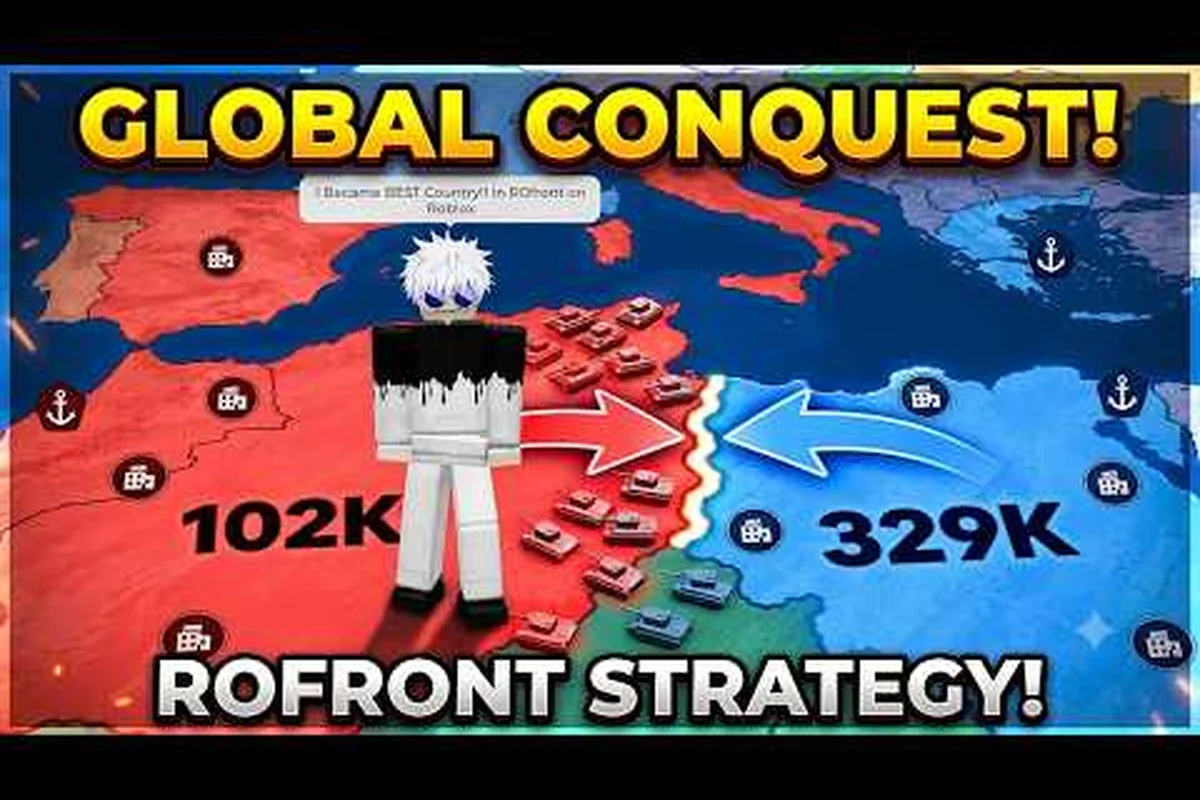
RoFront launched as a real-time conquest game in which players claim territory, build an economy, train units, and fight competing nations. The OpenFront listing on Steam provides useful context for the underlying format: a shared world, simultaneous multiplayer competition, and continuous territorial pressure rather than isolated mission-based battles.
That distinction shapes how the early updates should be interpreted. A change in unit strength, construction speed, or territorial control can alter the entire strategic rhythm, so even a small adjustment may affect whether players prioritize expansion, economy, or defense. The September 26 launch therefore represents the baseline against which later observations are compared.
Why no numbered changelog matters
Most mature games label versions so players can identify a patch instantly. RoFront does not currently provide that same transparency, making its version history less precise than the official page’s two dates might initially suggest. This does not make the history useless; it changes the correct level of certainty attached to each claim.
| Source type | What it can confirm | What it cannot confirm |
|---|---|---|
| Official Roblox game page | Creation date and latest listed update | Individual changes within each build |
| In-game behavior | Observable mechanics on a given date | Exact developer intention |
| Community reports | Problems noticed in early versions | Complete or perfectly synchronized records |
| Shared strategy guides | Changes affecting player tactics | Whether every listed change was intentional |
The practical answer to when was RoFront last updated is October 24, 2026, based on the official page snapshot. A player who asks about the RoFront last update on a later date should check the same game page, since its displayed date can change without this article being revised.
RoFront Patch History: What Can Be Reconstructed
The public rofront patch history cannot be written as a conventional list of patch numbers because no public changelog identifies individual builds. Instead, the defensible record consists of the launch, the October 24 refresh, and gameplay differences reported by players during that period.
A community beginner thread in r/Roonby’s RoFront strategy discussion describes the core loop of controlling territory, strengthening an economy, training troops, and battling other nations. It also recommends adjustments such as expanding carefully, protecting early resources, and choosing targets that fit the army a player can realistically support.
Because community documentation may lag the newest build, those suggestions should be treated as early-version observations, not guaranteed settings for October 24. This is especially important in a conquest game where unit production and territorial control can change how quickly a risky strategy becomes ineffective.
Reconstructed change categories
| Change category | Evidence level | Practical effect | Confidence |
|---|---|---|---|
| Early access and onboarding | Official release plus player discussion | Players learned territory, economy, training, and combat | High |
| Unit and army tuning | Community-observed gameplay reports | Front-loading and unit composition can shift | Medium |
| Economy and expansion balance | Community gameplay comparisons | Construction and territory priorities may change | Medium |
| Map and server behavior | Observed in matches and player reports | Movement and conquest decisions need rechecking | Medium |
| Bug fixes and polish | October 24 page update, details unavailable | Some faults were likely addressed, but scope is unknown | Low |
The central limitation is that “the October refresh” is a date, not a feature list. It would be misleading to invent a tank rebalance, construction timer adjustment, or new unit solely because the page changed. Unless the developer published a matching announcement, those claims remain unverified balance changes.
A practical before-and-after test
Players looking for evidence of the rofront version history can compare two controlled sessions rather than relying on scattered opinions. Use the same territory, build order, unit composition, and time budget, then record what happened. The RoFront new update overview can help separate an announced change from a balance change inferred from play.
| Test area | What to record | Useful comparison |
|---|---|---|
| Opening economy | Resources gathered during the first fixed interval | Early expansion efficiency |
| Army readiness | Time and cost required for the chosen troop mix | Whether unit timing changed |
| Territory pressure | Distance and obstacles affecting a target | Whether routes or priorities shifted |
| Combat outcome | Which side wins under identical setups | Whether damage or durability changed |
| Visual feedback | Clarity of health, range, and capture indicators | Whether the interface was polished |
This method produces local evidence, not an official changelog. It is most useful when several players report the same result, because repeated community observations provide stronger support than one isolated match.
RoFront Version History and the October 24 Refresh
The latest dated milestone in the available rofront version history is the October 24, 2026 refresh, listed on the official game page one day before the source snapshot was verified. The page also showed approximately 43.6 million total visits, 52,900 favorites, and around 20,800 concurrent players at that point, alongside a maximum server size of 55 players.
Those figures are useful indicators of the game’s reach and pace of activity, but they do not reveal what changed in the refresh. They also should not be treated as permanent figures, since visits, favorites, and concurrent population fluctuate. The stable point is that the public version history begins on September 26 and reaches a documented update on October 24.
What the latest update means for players
A platform-level update can contain visual adjustments, bug fixes, economy tuning, or changes that have little effect on the core game. Without official details, the most accurate approach is to avoid attributing a specific balance change to October 24. Players should treat the refresh as a checkpoint and compare current behavior with early reports.
| Player goal | Best response to the October 24 update | Reason |
|---|---|---|
| Learn the basics | Restart with a simple economy and territory plan | It isolates core mechanics from advanced play |
| Test a favorite strategy | Repeat the same build under fixed conditions | It reveals tuning more clearly than general impressions |
| Prepare for competition | Recheck opening routes and target priorities | Conquest play can change through small balance shifts |
| Understand patch details | Consult the developer’s official announcements | The game page date does not include patch notes |
| Evaluate early advice | Treat older guides as dated observations | Community posts may describe earlier versions |
For a broader look at newly introduced content, the RoFront new features guide can help distinguish persistent systems from temporary early-game behavior. The important principle is to verify claims against the current client because a feature guide written before the October refresh may no longer match the live experience.
What remains unknown
The record does not establish whether the refresh introduced a new unit, altered a building, changed a map, or merely repaired a defect. It also does not reveal how many deployments occurred during the 28-day span between the two official dates. The correct summary is therefore precise but limited: RoFront launched on September 26, and the official page listed October 24 as its most recent update by October 25.
How to Track Future RoFront Updates
Tracking the rofront updates history is straightforward because the official game page exposes a last-updated field. Still, players should distinguish a platform date from meaningful patch documentation. A date can establish that something changed, while only a description, video, or repeatable gameplay comparison can establish what changed.
A reliable monitoring routine includes checking the official page, looking for developer announcements, and comparing the same controlled scenario. The RoFront update news guide provides a useful structure for separating announcements, gameplay observations, and community discussion before drawing conclusions.
A Repeatable Four-Part Check
-
Record the page date. Open the official game page and note whether its last-updated date has moved beyond October 24, 2026.
-
Find the matching announcement. Check the developer’s public communication for the corresponding build, patch, or fix list.
-
Run a controlled comparison. Repeat a standard opening or combat scenario so the result is not based only on memory.
-
Compare independent reports. Community observations can confirm whether a change appears beyond one account or one match.
| Tracking method | Strength | Main limitation |
|---|---|---|
| Official game page date | Authoritative update timestamp | No change list |
| Developer announcement | Usually explains intended features or fixes | May be unavailable for minor work |
| Controlled in-game test | Demonstrates current behavior | Cannot prove developer intent |
| Community comparison | Reveals practical effects | Can be outdated or subjective |
| Shared strategy reference | Helps explain consequences | Requires verification against the current build |
Interpreting a new date
If the official page shows a new date, that becomes the newest answer to rofront when was RoFront last updated. It does not automatically mean every old guide is wrong, but it is a signal to recheck important facts such as unit costs, attack behavior, economy timing, and interface clarity. The RoFront bug fixes guide is especially relevant when a fresh deployment addresses menus, controls, buildings, or match behavior.
Never describe an unannounced tweak as confirmed merely because gameplay feels different. Use careful wording such as “community testing suggests,” “the current build appears to,” or “official details have not been published.” This preserves trust and prevents a single match from being presented as an authoritative patch note.
RoFront Release Date and Early Community Evidence
The official page’s creation date establishes the RoFront release date as September 26, 2026. Player discussion confirms that the game was active during its opening period, while community guidance reflects the conquest systems players were learning: territory control, economic development, troop training, and large-scale competition.
The game’s public footprint also indicates that it was not a small closed test. At the October 25 snapshot, the official page showed more than 43.6 million visits, about 52,900 favorites, and roughly 20,800 players online, with a server cap of 55 players. Those figures help explain why even minor balance adjustments could produce widespread discussion.
| Signal | Observed value or status | Interpretation |
|---|---|---|
| Initial page creation | September 26, 2026 | Practical release milestone |
| Last listed update | October 24, 2026 | Latest documented refresh in this history |
| Total visits | 43.6 million+ | Large cumulative audience snapshot |
| Favorites | Approximately 52,900 | Strong early interest metric |
| Players online | Approximately 20,800 | Active concurrent audience at verification |
| Maximum server size | 55 players | Designed around relatively large matches |
| Public changelog | Not present | Fine-grained version details are unavailable |
This evidence shows a game moving quickly from release into a heavily populated launch period. However, high activity does not prove that every reported balance shift was deliberate, nor does a large player count reveal the exact economic tuning. Community experience is best used to identify questions that a future official patch note could confirm.
The 28-day gap from launch to the last listed update is particularly relevant for strategic play. A build can change enough in four weeks to alter opening priorities, while a community guide written on day three may already feel outdated. Recurring advice should therefore be checked for three details: the date it was written, the observed build, and whether another player reproduced the result.
Frequently Asked Questions
When was RoFront last updated?
The official RoFront game page listed October 24, 2026 as its latest update when checked on October 25. That date answers the latest known RoFront last update question, but it does not reveal the contents of the refresh. Because the page can change later, check the official listing again for the current timestamp and look for a matching developer announcement.
What is the RoFront release date?
The official Roblox page was created on September 26, 2026, making that the RoFront release date used in this history. This is a platform-level milestone rather than a numbered software version. Players can find more background on the opening period in the RoFront launch date overview.
Is there a complete RoFront patch history?
No complete public patch history is currently available. The official page confirms the September 26 launch and October 24 refresh, while community reports and gameplay comparisons help identify possible differences between early versions. Exact intermediate build dates, official patch numbers, and definitive change lists should not be inferred without developer documentation.
When did RoFront come out?
RoFront came out on September 26, 2026 according to the creation date on its official game page. The game entered a period of rapid iteration immediately afterward, with the page listing October 24 as a later update. Community advice published during those first weeks may still reflect older economy, unit, or territory behavior.
What changed in the October 24, 2026 update?
The available official record confirms the October 24 update date but does not publish a detailed change list. To determine what changed, compare the current build with an earlier build using a fixed opening order and combat setup. Treat community reports as provisional until an official announcement or reproducible result confirms the adjustment.
The rofront updates history currently spans one rapid development cycle: a September 26 launch, community adaptation during the first weeks, and an October 24 refresh confirmed by the official page. Its most important lesson is methodological—use platform dates for verified milestones, controlled tests for behavioral differences, and community reports only where official patch details remain unavailable.