
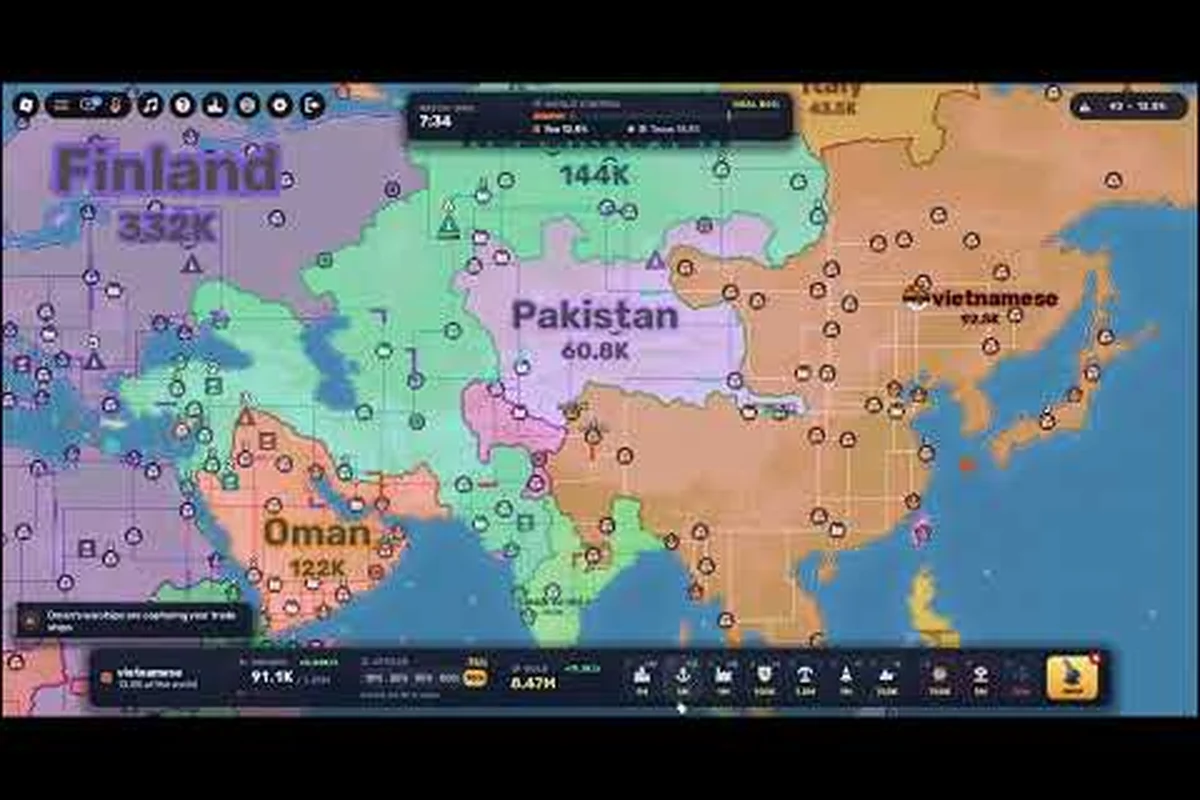
A betrayal in RoFront can cost more than a lost battle because damaged trust, exposed supply lines, and abrupt wars may follow. This rofront alliance betrayal guide explains how to recognize warning signs, protect valuable territories, contain an attack, and rebuild influence without sacrificing every future alliance.
What Alliance Betrayal Looks Like in RoFront
RoFront combines territory control, economic development, troop production, and world PvP. The official RoFront game page describes a shared world map where nations build cities, ports, and factories, negotiate alliances, fight neighboring powers, and can use nuclear weapons. In that environment, cooperation is useful, but every agreement should be evaluated through the risk it creates for your nation.
Betrayal does not always begin with an attack. It may appear as repeated border pressure, intelligence requests that grow unusually specific, troop movements near a friendly border, sudden changes in diplomatic behavior, or an ally demanding access to strategically important territory. The warning sign is most serious when several behaviors change together, because a single unusual move can have a legitimate explanation while a pattern deserves a defensive response.
| Warning sign | What it may mean | Immediate response |
|---|---|---|
| An ally repeatedly requests access to a core city | Preparation for occupation or a surprise push | Limit access and move reserves toward the area |
| Troop stacks gather beside a supposedly peaceful border | A coordinated attack may be forming | Strengthen defenses and review possible landing routes |
| Trade offers suddenly become one-sided | The ally may be isolating your economy | Diversify partners and reduce dependence |
| Mediation or threats replace normal negotiation | The alliance may be entering coercion | Preserve evidence, contact other powers, and prepare options |
| An ally asks for your strongest unit composition | Intelligence collection before a hostile move | Conceal plans and rotate vulnerable targets |
The central lesson in a rofront alliance betrayal guide is to treat trust as a strategic resource, not a guarantee. A good alliance can shorten a conquest, but your survival still depends on the assumption that a partner might become an opponent, lose control, or change priorities.
Distinguishing Hostility From Negotiation
Hostile behavior and difficult diplomacy are not identical. A demanding ally may be negotiating poorly, dealing with internal pressure, or testing your boundaries. The relevant question is whether behavior becomes more dangerous over time, especially when it directly targets your economy or territorial integrity.
Use a three-strike observation model for major decisions: treat each incident as evidence of whether an ally is merely negotiating badly or deliberately weakening your position. For example, repeated border harassment that interrupts resource routes is more serious than one disputed trade order. Track the target, timing, and economic effect of every incident; when pressure shifts from isolated demands to coordinated attacks on your economy or territorial integrity, the case for containment becomes stronger. This avoids punishing a temporary misstep while preserving the option to defend critical assets later.
-
First incident: Clarify the concern, protect the most sensitive asset, and reduce unnecessary exposure.
-
Second incident: Prepare a nonaggression response, reinforce the threatened area, and build an alternative supply plan.
-
Third incident: Shift from observation to containment by moving critical resources, strengthening defenses, and forming a defensive coalition with reliable partners.
This three-strike observation model prevents impulsive retaliation while preserving the alliance’s ability to recover if pressure comes from poor diplomacy rather than deliberate betrayal. For example, if the first incident is a disputed trade order, document it and protect the relevant supply route; if the second is border harassment against a resource corridor, prepare a nonaggression response and alternative supply plan; only a third coordinated attack should justify containment through defensive coalition-building. The progression matters because each incident changes the strategic cost of waiting, so containment remains measured by the target, timing, and economic impact of the hostility rather than by emotion alone.
Building a Betrayal-Resistant Alliance Structure
The best defense against betrayal is an alliance structure that remains functional when one member turns hostile. If every unit, trade route, and strategic decision depends on one partner, a single reversal can destabilize your entire nation. A resilient position distributes risk without spreading your attention so widely that you become vulnerable everywhere.
Start by mapping your dependencies. Separate each major ally into one of three groups: Core Partner, Conditional Support, and Opportunistic Contact. A core partner contributes consistently to shared goals. A conditional ally provides useful assistance but does not receive access to assets that could undermine you. An opportunistic contact is kept informed, but no critical plan is exposed to that player.
| Partner type | Appropriate access | Expected contribution | Security rule |
|---|---|---|---|
| Core Partner | Selected joint operations and shared objectives | Troops, trades, or coordinated pressure | Keep an independent defense reserve |
| Conditional Support | Limited coordination without core territory access | Temporary reinforcement or market access | Do not expose every movement plan |
| Opportunistic Contact | Public information and tentative talks | Information, neutral trade, or future potential | Build no strategy that requires their loyalty |
A practical rofront teaming guide should also define the alliance’s purpose before sensitive details are discussed. “We are stronger together” is not a plan. “We will pressure the northern power while each side protects its own core cities” establishes limits, reduces ambiguity, and makes changing behavior easier to identify.
Players should review their broader RoFront diplomacy tactics when deciding how much access an ally deserves. The important principle is to negotiate clear objectives without turning every agreement into a permanent commitment. That balance preserves cooperation while keeping your nation’s recovery options open.
Concentrate Power Without Creating Obvious Targets
Dependence is not the same as healthy concentration. Keeping one alliance at the center of every operation is risky, but spreading resources across too many weak partners is inefficient. A better approach is to maintain two dependable fronts: one partner for coordinated military action and another for economic or diplomatic support, while retaining a private reserve for emergencies.
Keep critical intelligence compartmentalized. A strong ally may understand your territory, and it is often reasonable to share plans with a trusted partner. However, revealing your weakest border, exact troop count, production bottleneck, and intended target simultaneously creates a concentrated answer key if that partner changes sides.
Use a tiered trust allocation model: give a proven partner broad strategic visibility, restrict another ally to a single operational role, and keep a private reserve under national control. For example, a military partner can coordinate front-line timing while a logistics partner receives only resource requirements, not reserve locations or fallback routes. If either ally defects, compartmentalization limits the losses; granting both allies the same intelligence creates a single betrayal point capable of exposing your entire war plan.
-
Share long-term goals with every committed ally.
-
Share operational timing only with partners who have a proven reason to know it.
-
Keep the location of reserves and fallback routes private.
-
Rotate the most exposed target when practical.
-
Design each joint operation with a way for your nation to continue if the partner withdraws.
This approach supports an effective rofront politics guide because it treats trust as something that can be allocated by information level rather than assumed from alliance loyalty. For example, a military ally may receive front-line timing and target priority while a logistics ally receives only resource requirements, ensuring that one defection does not expose both operational plans and reserve locations. A new partner may be sincere, but sincerity does not remove the practical consequences of poor access control or create time to rebuild compartmentalized intelligence.
How to Survive Betrayals Before They Become Catastrophic
A successful response begins before the first strike. Preparation determines whether you lose a border outpost or lose the logistical center of your nation. The goal is not to make betrayal impossible, because no diplomatic arrangement can guarantee another player’s behavior; the goal is to make each hostile move expensive, reversible, and limited.
Prepare three layers of protection. The first is a core reserve that never leaves the alliance structure. The second is a border reserve positioned close enough to reinforce threatened territory but not so concentrated that one attack can capture it all. The third is a mobile reaction force that can move toward a confirmed front without abandoning every other region.
| Protection layer | Purpose | Best placement | What to protect |
|---|---|---|---|
| Core reserve | Break up a coordinated attack | Near secure production or inland cities | Critical economic assets |
| Border reserve | Reinforce the first attacked border | Behind the most likely approach | Forward settlements and factories |
| Mobile reaction force | Respond after confirming an attack | Connected to several defensible hubs | Secondary cities and open flanks |
| Private fallback plan | Preserve recovery capacity | Known mainly by trusted leaders | Supply route and reserve location |
This layered structure is essential for rofront how to survive betrayals advice. When every defense unit is already committed elsewhere, even a limited betrayal can become a chain reaction. A reserve creates time, and time is what allows a player to read the attack, contact potential partners, and choose a measured counterattack.
Before joining a risky joint operation, also review the practical attack considerations in the RoFront troop deployment guide. Coordination matters, but a joint plan should not obscure who controls retreat routes, who can recall units, and what happens if the supposed ally attacks instead of advancing.
A Seven-Step Betrayal Response Plan
Use the first minutes after confirmation to stabilize the situation, not to seek revenge. A former partner may exploit captured border cities as forward bases, threaten nearby supply routes, and redirect resources intended for territorial expansion. Prioritize secure space, production continuity, and diplomatic positioning before committing to a counterattack; vengeance is useful only when it restores a defensible border without opening another front.
-
Confirm the hostility. Verify the attack, read the map, and distinguish a border raid from a full invasion.
-
Stop the bleeding. Reinforce the threatened border, withdraw exposed units, and avoid sending reinforcements piecemeal.
-
Protect the economy. Secure factories, ports, production chains, and trade routes before chasing enemy troops.
-
Stabilize diplomacy. Tell remaining partners what happened, request observation or mediation, and avoid spreading unverified claims.
-
Create a defensive coalition. Approach reliable powers with shared interests, clear borders, and limited objectives.
-
Counterattack selectively. Target weak enemy positions and exposed routes rather than committing to a prolonged war of attrition.
-
Audit the alliance. Identify intelligence leaks, overextended commitments, and single points of failure before rebuilding trust.
| Time frame | Priority | Desired result |
|---|---|---|
| First minutes | Confirm and contain | Prevent the breach from widening |
| First hour | Protect economy and contacts | Preserve production, trade, and coalition options |
| Following day | Consolidate defenses | Create a stable counterattack position |
| Longer term | Rebuild alliances | Replace dependence with mutual obligations |
The first phase is the most important because a map can change quickly in a real-time territory game. A former ally who captures one border city may use it as a forward base, threaten nearby supply routes, and force you to spend resources that were intended for expansion. The correct objective is therefore often to reclaim safe space rather than instantly destroy the attacker.
Recognizing Political Strategy and Intent
A former ally can be deceptive without making an obvious statement. The most important political signals often concern priorities, timing, and access. If an ally suddenly prioritizes a city that blocks your expansion, asks for military intelligence unrelated to the current plan, or changes behavior immediately after another power appears on the map, motive may be more important than words.
This rofront political strategy is based on incentives. A player may betray an ally because a new threat has changed the balance, because a rival offers better rewards, because an internal leader has lost control, or because the alliance was formed for one campaign and no longer serves its purpose. Personal betrayal is possible, but strategic reassessment is often easier to understand and sometimes easier to resolve.
| Apparent action | Possible hidden objective | What to verify | Appropriate move |
|---|---|---|---|
| Sudden friendship with a rival | Forming a larger anti-player bloc | Their behavior toward shared enemies | Strengthen alliances through mutual obligations |
| Demand for secret troop details | Planning a counterattack | Movement of that ally’s forces | Limit disclosure and relocate reserves |
| Restraint during a lucrative raid | Saving strength for a later move | Border buildup and production changes | Maintain contingency defenses |
| Abrupt peace proposal | Stabilizing its position for another campaign | Terms concerning territory and access | Negotiate only with enforceable boundaries |
| Public support for you | Improving reputation before switching sides | Whether support creates obligations or access | Accept public cooperation without revealing sensitive plans |
The official page states that 88 player nations and hundreds of tribes can compete for control, with victory requiring control of 80% of the world. The exact figures were verified on October 25, 2026, but RoFront has no public changelog and limited published balance data. Therefore, numbers and exact mechanics may change, and political judgments should be based on current server behavior rather than an assumption that an old community guide still applies.
Player reports and community-created guides can help identify recurring patterns, although they may lag the rapidly changing meta. One community video about watching for betrayal while applying an attack strategy has drawn roughly 27,000 views, which suggests that coordinated PvP and alliance risk are already central to player discussion. Treat such material as community insight rather than a guarantee that every alliance will behave the same way.
Containing Losses and Rebuilding After an Attack
Once betrayal becomes an active war, your objective should be to restore a stable economic and military position. Counterattacks work best when they improve your position, not when they merely punish the attacker. A former ally may have larger territory, stronger troops, or a more established network, so a direct assault can be the worst first move.
Begin with an asset inventory. Sort your cities, ports, factories, and troop-producing areas into three categories: secure, contested, and critical. Secure assets can support the response. Contested assets should be defended if they are defensible or evacuated if holding them would trap your forces. Critical assets deserve reinforcement even if that means surrendering less valuable ground.
A controlled retreat can preserve more value than a heroic defense. Surrendering a distant border settlement may free units, prevent enemy units from becoming trapped, and keep your strongest production online. The goal of a recovery is to restore optionality, not to preserve every square on the map at any cost.
Repairing Political Credibility
After an attack, other nations will evaluate your reliability. Explain the former ally’s actions factually, document commitments that were broken, and avoid making every disagreement sound like another betrayal. Credibility depends on consistent standards: if a promise mattered when making it, it should matter when enforcement becomes inconvenient.
Rebuild trust in stages, using RoFront political strategy to make each concession conditional rather than symbolic. For example, restore limited market access first, then negotiate mutual defense only after the former ally honors two consecutive commitments; a missed deadline should trigger an automatic reduction in shared commitments, not a public rupture. This staged approach preserves leverage while demonstrating that cooperation can survive a temporary betrayal, and it creates an observable record of restored reliability without pretending the original breach never occurred.
-
Begin with a small, low-risk exchange.
-
Define the exact purpose and limits of cooperation.
-
Share information gradually, using the trust allocation model.
-
Honor terms even when another option seems more profitable.
-
Review the arrangement after each operation and record what changed.
A revised rofront how to team strategy can include mutual defense, market access, and coordinated targets, but it should specify what happens if one member cannot fulfill an obligation. A clear exit clause is not a weakness; it can keep a temporary setback from destroying the entire alliance.
For broader context, compare these defensive principles with the RoFront alliance strategy guide. The best alliances should offer a clear benefit greater than the risk of dependence. If cooperation requires surrendering strategic freedom, reconsider the balance before expanding the relationship.
Practical Tests for a Safer Alliance
Before trusting a player more deeply, run low-cost tests. You do not need sensitive intelligence to discover whether an alliance honors boundaries, responds to pressure, and communicates accurately. The objective is not to manufacture suspicion; it is to confirm that the relationship behaves as intended before you increase your investment.
A practical rofront politics guide can use a commitment ladder. Begin with public cooperation, then move to limited trades or joint defense, followed by temporary troop coordination, and only afterward consider deeper strategic access. At every step, check whether the ally follows the agreed limits.
| Test stage | Action | Positive signal | Warning signal |
|---|---|---|---|
| Public alignment | Coordinate a minor statement or limited operation | Ally honors the stated boundary | Ally invents new obligations |
| Limited exchange | Trade a modest resource or coordinate one defense | Benefits arrive as promised | Payment is delayed or redirected |
| Joint operation | Share a limited objective and timing | Troops and retreat remain coordinated | Ally uses the plan against you |
| Trusted access | Permit selected strategic coordination | Partner warns you of credible threats | Secrets leak before joint action |
| Major commitment | Combine meaningful military or economic assets | Terms remain clear and fair | Partner expands demands after success |
Keep a simple alliance ledger. Record each promised contribution, what you supplied, disputes, delays, and unexplained deviations. Such a record helps you distinguish normal friction from a deliberate pattern, and it prevents a single bad outcome from making you ignore years of reliable behavior.
The best additional test is to ask what happens if the partnership ends tomorrow. If your plan requires a specific ally’s troops at a precise time, your economy needs a backup route, and your border has only one defensive reserve, you are not ready to deepen the alliance. That thought experiment is central to any rofront alliance betrayal guide because it turns a vague promise into a concrete risk assessment.
How to Rebuild Trust and Re-enter Diplomacy
After a betrayal, rebuilding diplomacy is harder than joining a new alliance, but your response can still demonstrate reliability. Do not hide behind revenge rhetoric, because other players will wonder whether you could become hostile to them as well. Instead, make your future terms understandable: no hidden access, no indefinite troop commitments, and no expectation that one ally controls another’s strategy.
First, stabilize internally. Review which trusted players received sensitive information, identify whether your own communications revealed too much, and document equipment, resources, or troops lost. Avoid punishing people based on rumor; use concrete evidence and acknowledge uncertainty where evidence is incomplete.
Then identify the smallest useful partnership. A limited trade or border-defense arrangement is safer than an instant full-scale alliance. Agree on the contribution, the duration, the withdrawal terms, and the conditions for expansion. If the partner respects those terms, add another layer. If not, the loss remains manageable.
A trustworthy rofront how to survive betrayals framework should also help you understand that recovery is not simply a return to the old structure. Replace circular dependence with reciprocal value. If your nation offers a strong benefit to an ally, that ally has a reason to preserve the relationship. Examples include protecting a shared flank, supplying a demanded resource, or reducing pressure from a common enemy. Make those contributions visible and measurable without making threats the foundation of cooperation.
Finally, watch your own behavior. A player who rapidly changes partners, copies sensitive information, or abandons every commitment may create the same instability that RoFront’s official world-PvP setting is designed to expose. The official game page shows a young, rapidly iterating title with tens of thousands of concurrent players in its October 2026 snapshot, so political patterns can change quickly. Recheck assumptions after significant balance or population shifts rather than treating a once-successful alliance formula as permanent.
Frequently Asked Questions
What is the first step after an ally betrays you in RoFront?
First confirm the attack, then contain it by securing threatened borders, recalling exposed units, and protecting factories, ports, and supply routes. Do not begin with an emotional counterattack. Your priority should be preventing a single breach from becoming a collapse of your economy and military position.
How can I tell whether an alliance is preparing to betray me?
Look for a pattern of unusual troop buildup, border pressure, intelligence requests, one-sided trade demands, and sudden diplomatic changes. One action may have a legitimate reason, but several escalating behaviors around the same territory or resource should prompt defensive preparations, limited disclosure, and a review of your alliance terms.
Should I keep an alliance after one member attacks me?
The decision depends on whether the attack was isolated, whether the ally made a credible recovery, and whether you can control future exposure. A broad offensive often calls for separation and defensive rebuilding. A limited, openly acknowledged violation may be repairable, but only with restricted access, clear consequences, and a smaller initial commitment.
How do I protect valuable cities from a surprise invasion?
Keep an independent core reserve, reinforce the border that faces the former ally, and avoid concentrating every sensitive asset in one exposed region. Secure production and ports first, because losing those can weaken the entire nation even if the enemy occupies only one territory. Use defensive coalitions when a counterattack is not immediately sustainable.
What makes a new RoFront alliance more trustworthy?
Trust grows through small, consistent actions rather than promises alone. Begin with limited cooperation, define every contribution and boundary, share sensitive information gradually, and reward partners who honor their commitments. A durable alliance also gives both nations a reason to cooperate even when no immediate threat is forcing them to act together.