
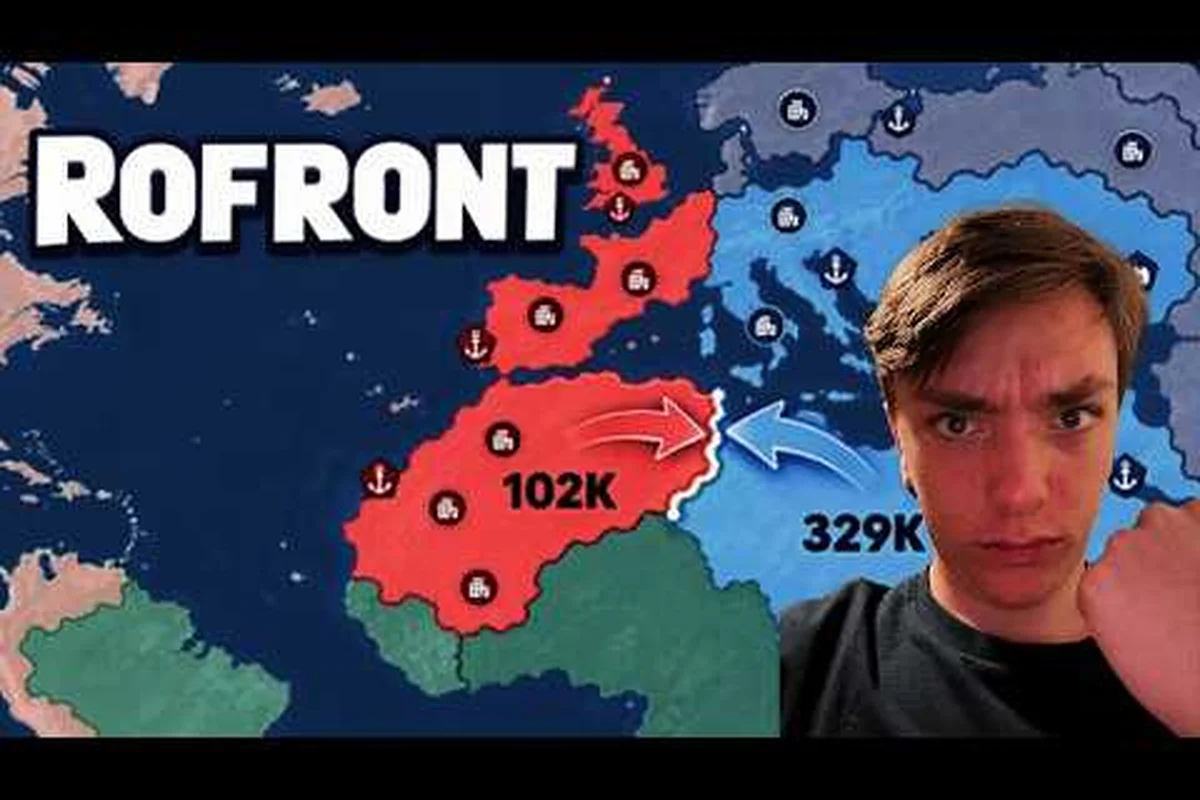
RoFront alliance tips matter because shared territory creates more opportunities than it creates threats, but only when partners agree on targets, timing, and limits. A clear co-op plan turns separate armies into a coordinated campaign instead of competing for the same land.
What Makes Productive RoFront Alliances?
A productive RoFront alliance is not simply two players who avoid attacking each other. It is a temporary agreement that gives each side a distinct role, a visible objective, and a clear understanding of when cooperation should end. The official RoFront game page describes a shared world with 88 player nations and hundreds of tribes, so allies must coordinate within a much larger competitive environment.
The most useful alliance has four elements: a shared target, separate responsibilities, limited resources, and a renewal condition. If partners share every plan, they may also duplicate one another’s construction. If they share nothing, they are merely tolerating each other. The better arrangement divides the battlefield into complementary parts.
Assign a Different Mission to Each Partner
Before any attack, choose a primary objective that both sides can support. Attacking the same enemy settlement can waste troop capacity, especially when one player reaches the target before the other. It is often better for one ally to hold a corridor while the other captures territory, then rotate only after the front is stable.
| Alliance role | Main job | Best use | Common mistake |
|---|---|---|---|
| Blocker | Pressure another border | Diverts enemy attention | Leaving the home border undefended |
| Attacker | Capture priority land | Produces immediate territory | Sending every available troop |
| Builder | Improve economy and production | Supports later pushes | Building without a defense plan |
| Reserve | Reinforce threatened allies | Stabilizes unstable fronts | Responding too late to a collapse |
| Independent scouter | Track enemy movement | Reduces surprise attacks | Sharing unverified information as fact |
This division works because the map is shared but each player still controls their own economy, troops, upgrades, and territory. The RoFront alliance strategy guide provides additional ways to evaluate allies beyond a simple promise to cooperate.
Agree on a Shared Victory Goal
RoFront’s official game page lists 80% world control as the conquest goal. That number gives allies a useful destination, but it does not determine how they should divide responsibility. A pair with 30% control, for example, may need one side to expand along a quiet coast while the other protects a vulnerable interior border.
A workable target statement should identify the territory, time window, and expected contribution so both allies know what success means before deploying troops. For example, an alliance approaching the 80% world-control objective could agree that one player holds a coastal flank until the other reaches a minimum troop threshold, then both launch the central capture. This prevents duplicated marches and leaves room to adapt if enemy movement disrupts the operation.
-
Territory: secure the western corridor before contesting the central region.
-
Time window: begin the joint push after both armies pass their minimum troop threshold.
-
Contribution: one side creates a diversion; the other leads the capture.
-
Limit: neither side claims the other’s core territory without discussion.
Shared context prevents each player from making reasonable local decisions that conflict with the campaign. Players can still adjust plans when enemy movement changes, but they should distinguish between a necessary adaptation and an attempt to take credit for the partner’s work.
RoFront Alliance Tips for Choosing the Right Partner
The best partner is not always the player with the most troops or the strongest nation. Reliability, map position, and complementary strengths matter more because alliances should improve decision-making rather than create another dependency. A careful approach to rofront diplomacy begins by asking what each side can provide and what each side fears losing.
Check Reliability Before Power
Community discussions on the r/Roonby beginner guide thread repeatedly emphasize coordinated economies, territorial expansion, and troop use, although community advice may lag behind balance changes. Player reports can reveal whether an ally communicates before acting, but they should support—not replace—direct observation during the match.
| Partner quality | Positive sign | Warning sign | Practical response |
|---|---|---|---|
| Communication | Announces plans and losses | Stays silent until an attack | Require simple status updates |
| Economy | Builds a sustainable income plan | Spends everything at once | Set a minimum reserve |
| Geography | Covers a different front | Bases beside your main route | Assign a separate axis |
| Combat behavior | Protects an agreed ally | Redirects attacks at your land | Narrow the agreement |
| Flexibility | Adapts after a setback | Rejects every change | Use short-term goals |
Observed behavior is stronger evidence than reputation, status, or a promise made before the match. Allies can still change, but the first two coordinated operations reveal whether their decisions are predictable and whether both sides benefit from the arrangement. For example, if an ally covers a separate territorial front, preserves a minimum economy reserve, and sends status updates before an attack, those signals support a long-term RoFront alliance; if they redirect troops to your land or reject every change after a setback, test the partnership with a short-term goal instead. This approach lets you judge RoFront diplomacy through concrete troop, territory, and economy decisions rather than reputation or an untested peace promise.
Map Position Matters More Than Appearance
A visually impressive nation may still be a poor partner if its useful troops are on the opposite side of the map. Look for route complementarity: can one ally protect the other’s rear, reach a contested region quickly, or provide a believable threat that draws enemies away?
The shared battlefield makes geography central to diplomacy. Use the RoFront map guide to identify connected borders, awkward approaches, and corridors that an enemy can pressure. These details should determine target selection, not simply which territory appears closest on the screen.
Define Limits Before Trusting Completely
Every alliance benefits from boundaries, especially when the match is large enough for other nations to exploit the partnership. A clear agreement should cover three sensitive areas: territory ownership, troop commitments, and nuclear escalation. For example, both sides can record whether captured provinces belong to the nation that captured them or to the alliance, then assign a 60-second reserve-response window before committing troops. Nuclear rules should also specify whether launch notice is required, since withholding that information can turn a limited border strike into a full alliance war. These limits are most valuable when they are agreed before troop movements begin, allowing each commander to act quickly without making an unauthorized strategic decision.
| Topic | Questions to settle | Example working rule |
|---|---|---|
| Territory | Who owns captured land? | Each side keeps land it personally captured |
| Troops | When must reserves be available? | Support after a 60-second warning |
| Nuclear use | Is advance notice required? | Warn before targeting any ally’s border |
| Third-party attacks | Who receives priority support? | The side under direct attack receives help |
| End of alliance | What happens after the campaign? | Reassess when either side reaches 30% control |
These rules need not be legalistic; their purpose is to prevent misunderstandings during a fast RoFront war, when a delayed message or misplaced claim can create a larger conflict. For example, if a 60-second reserve-response window is ignored while a third-party nation attacks, the ally may feel betrayed and redirect troops away from defending the original front. A simple confirmation—such as “Claim acknowledged; reserves deploying in 60 seconds”—keeps troop commitments, captured territory, and nuclear escalation separate without slowing the alliance’s next decision.
Coordinating Attacks, Defense, and Resource Support
Strong rofront alliances operate like a small joint staff. They divide targets, preserve emergency reserves, and use each other’s strengths without becoming too dependent. Coordination should reduce uncertainty while leaving both players enough freedom to react to immediate battlefield changes.
Build a Simple Call-and-Response Plan
A practical attack cycle has four stages: identify, commit, support, and review. The first side marks a target and announces the intended timing. The second confirms the role it will perform. Once the operation starts, neither side improvises a conflicting move without warning.
| Stage | Ally A | Ally B | Success condition |
|---|---|---|---|
| Identify | Select target | Validate route and enemy risk | Both sides understand the objective |
| Commit | Send main force | Send supporting force or diversion | Troops arrive in a useful sequence |
| Support | Focus on capture | Block reinforcements | Enemy cannot stabilize the front |
| Review | Record losses and gains | Assess remaining reserves | Both sides adjust the next plan |
This structure is flexible enough for different armies. A small player may handle blocking and follow-up pressure, while a larger partner leads the capture. The key is that both sides contribute a meaningful action rather than merely joining a battle at different times.
Match Reinforcements to the Actual Threat
A fixed reinforcement rule can cause troops to move toward a lost front while another ally collapses. Instead, classify requests by urgency. A direct emergency deserves immediate support, a delayed attack can wait for a prepared reserve, and an expansion request should only proceed if the requesting side still controls its defensive position.
| Request | Test | Appropriate response |
|---|---|---|
| Emergency | Is the ally’s core territory exposed? | Send available reserve troops now |
| Delayed | Can the defender hold for several minutes? | Prepare, then reinforce on schedule |
| Expansion | Is the target worth more than current stability? | Hold unless the target creates a clear advantage |
| Nuclear emergency | Is a major attack about to land? | Confirm target, warning, and mutual response |
Community experience suggests that communicating intentions matters because allied armies can otherwise be mistaken for threats. A short message such as “blocking north for 90 seconds” gives the other side time to act without exposing private plans or discussing unsupported enemy counts.
Avoid Mirrored Upgrades
Partners often build identical armies because strong individual strategies are easier to copy. That can waste the benefit of cooperation. If one side is strong in production and the other has a favorable defensive position, the combined plan should reflect that difference.
-
Attacker-forward pair: one side leads with combat power while the other protects the rear and maintains production.
-
Defensive pair: one side holds a vulnerable border while the other expands away from danger.
-
Territorial pair: one side captures land while the other prevents an outside power from reclaiming it.
-
Production-focused pair: both protect economic assets, then convert saved income into a carefully timed attack.
Economies of specialization make the alliance less predictable to opponents and reduce unnecessary competition for the same upgrade, troop, or construction slot. For example, a Production-focused pair can assign one partner to uninterrupted base building while the other protects the expansion route, preventing both from chasing the same early military target. Splitting research and construction responsibilities also reduces upgrade contention, letting each side reinforce its comparative advantage instead of mirroring the enemy’s composition.
Managing RoFront War Decisions as a Team
Even a cooperative team may disagree about when to start a rofront war. One player may see a vulnerable enemy border, while another has an unstable economy. The answer is not to choose whichever target is more exciting; it is to compare expected benefit, risk, and opportunity cost.
Score a Proposed Target Together
Use a simple one-to-five score for each category. The numbers create a shared decision, although they do not replace judgment. A target with a high value but catastrophic risk may still be inferior to a moderate target that strengthens your position.
| Factor | 1 point | 3 points | 5 points |
|---|---|---|---|
| Strategic value | Minor land | Useful corridor | Opens a major expansion route |
| Enemy weakness | Strong defense | Mixed strength | Clear vulnerability |
| Economic cost | Heavy losses likely | Manageable | Low-risk capture |
| Supply access | Difficult route | Reasonable route | Direct and secure |
| Defensive risk | Opens vital border | Moderate exposure | Minimal exposure |
| Alliance value | Competes with ally | Independent | Completes the joint plan |
Know When Not to Start a War
Sometimes the strongest alliance move is to delay. Attacking while an ally lacks troops, while the economy is producing, or while another border is unstable can undo weeks of preparation. Use a minimum readiness gate before declaring a joint operation.
The gate can require both players to have a synchronized combat build before committing: for example, one ally finishes an alliance base with the Fortification Facility while the other positions ranged units near the target, then both confirm that resources, reinforcement travel time, and base-defense capacity can absorb an enemy counterattack. This prevents a joint operation from becoming a one-sided assault if the ally’s infrastructure or troop queue is still incomplete.
-
A selected target with a clear route.
-
Enough troops to complete the objective without exposing the home territory.
-
A reserve for an unexpected enemy response.
-
Confirmed roles and attack timing.
-
Agreement on who handles any allied base that comes under pressure.
When one side fails the gate, the best plan may be to hold, build, or protect a more valuable target. The guide to choosing when to begin a war offers a deeper framework for evaluating timing.
Handle Nuclear Threats as a Separate Decision
Nuclear weapons can change the logic of an alliance because one strike affects territory, deterrence, and trust at the same time. The RoFront nuke strategy guide explains the weapon’s strategic role, but allies still need a private agreement about warnings and retaliation.
A useful rule is to separate a defensive warning from a joint target request. One player may report an incoming threat or ask permission to strike a specific enemy base. The ally should not assume that warning means the entire alliance supports the strike, and the requesting side should not delay an emergency defense while waiting for a long discussion.
RoFront Peace, Trust, and Alliance Repair
Peace is not a punishment for failed diplomacy. It is a way to reduce risk when two players no longer share the same priorities. The best rofront peace process restores trust through observable actions, not promises alone. That matters because the world continues changing, and former partners may need to cooperate again.
Use a Three-Part Peace Agreement
A manageable agreement should contain a ceasefire, a map commitment, and a renewal point. The ceasefire prevents immediate contact, while the map commitment identifies neutral or protected areas, giving both sides a clear boundary for avoiding attacks. The renewal point explains when the arrangement will be reviewed, so temporary restraint does not accidentally become a permanent territorial promise. For example, a clause such as “no attacks for the rest of the match” limits escalation without closing off future territorial competition, while a review trigger for a major external power’s attack allows the alliance to respond when the war’s conditions change.
| Clause | Clear version | Purpose |
|---|---|---|
| Ceaseasefire | No direct attacks for the rest of the match | Stops immediate escalation |
| Territory | Neither side contests the other’s current core land | Preserves economic stability |
| Neutral zone | Nearby border settlements remain outside attacks | Protects vulnerable structures |
| Communication | Emergency messages are allowed | Prevents accidental escalation |
| Review | Reassess if a major external power attacks | Allows a response to changed conditions |
Peace without boundaries often fails because one side interprets temporary restraint as a permanent territorial promise. Label each disputed area explicitly as protected, neutral, or contestable, and attach the restriction to the ceasefire’s duration rather than to the map itself. For example, “the neutral zone remains outside attacks, but either ally may claim the unlisted border settlement after the review point” prevents a ceasefire clause from being read as a territorial concession. This matters in RoFront because a vague peace agreement can suppress future expansion, limit resource access, and make an alliance look stronger while its shared war front is actually becoming harder to develop.
Rebuild Trust Through Small Actions
Trust is easiest to rebuild with low-risk actions that demonstrate restraint. Respect an agreed border, send a promised reinforcement, disclose a planned operation, and avoid opportunistic attacks. These actions are more useful than a long verbal apology because they provide evidence.
If a player breaks the agreement, the response should be proportionate. A border dispute may require negotiation, while a deliberate attack on core territory may require a firm defensive response. Review the peace negotiation guide for structured ways to handle disputed terms and restore workable relations.
Keep the Exit Condition Calm
Every alliance should have a point at which its original purpose has ended. That might occur when the joint target is captured, one side reaches a major territory threshold, or the map becomes dominated by a third power. The final meeting should divide shared responsibilities, return borrowed assets, and state whether a limited truce will remain.
Graceful separation preserves future options. A former ally may become a neutral neighbor, a distant rival, or even a useful partner in another campaign. Treating the alliance’s end as part of its design is more reliable than hoping every disagreement can be solved by one more attack.
A Practical RoFront Co-op Checklist
A strong ro-front alliance plan should be easy to communicate under pressure, with each member assigned a visible action instead of relying on vague intentions. For example, one player can monitor ro-front diplomacy while another tracks alliance movement and war readiness, allowing the group to react before a confrontation begins. This checklist turns broad goals into observable steps, making it useful for small alliances that cannot maintain a large command structure.
Before the First Joint Attack
- Choose a target that benefits both sides.
- Assign separate roles and approach routes.
- Agree on the attack window.
- Set minimum troop and economy thresholds.
- Decide who protects each side’s vulnerable border.
- Establish a nuclear warning and retaliation plan.
- Confirm ownership rules for captured territory.
During the Operation
- Announce the start without overexplaining private plans.
- Mark the target and each ally’s role.
- Send support according to urgency rather than habit.
- Preserve a reserve for enemy counterattacks.
- Report changes in enemy movement.
- Avoid opening a second front before the first is stable.
- Review the result immediately after the push.
After Success or Failure
- Count territory gained, losses, and remaining reserves.
- Identify which promises were kept or missed.
- Correct one communication issue before the next operation.
- Decide whether the target remains worth pursuing.
- Update the alliance’s end condition.
- Confirm whether the next objective is shared, separate, or neutral.
The best rofront co-op guide is one your team can execute without memorizing long scripts. If each side knows the objective, its own role, the trigger for support, and the limits of the agreement, coordination becomes a repeatable advantage rather than a matter of luck.
Frequently Asked Questions
Should small RoFront players form alliances with larger players?
Yes, if their roles are complementary and expectations are clear. A smaller player can protect a flank, supply distractions, or occupy a route while a larger ally captures priority territory. The arrangement works best when both sides contribute a defined action and the smaller player is not treated as disposable support.
When should RoFront allies attack the same target?
Attack the same target only when your forces can arrive in a useful sequence or when a concentrated assault is worth the cost. Otherwise, divide the objective: one side captures while the other blocks reinforcement. Two armies arriving separately can leave the target stronger than expected and leave both players exposed.
How can an alliance prevent a third nation from exploiting it?
Limit large joint movements, protect interior borders, and keep one capable player able to respond to outside threats. Avoid revealing the full joint plan in public chat, and require notice before major territory changes. The alliance should preserve enough military flexibility to respond to a third party rather than committing every troop to one front.
When is it reasonable to leave a RoFront alliance?
Leave when the shared objective no longer benefits both sides, the partner repeatedly breaks clear agreements, or continuing together creates greater risk than cooperation. First define what remains neutral, confirm territory ownership, and preserve a basic truce if needed. A clean separation is preferable to an open conflict that drains both economies.
How do RoFront alliances handle peace after a costly war?
Treat peace as a new operational agreement rather than an automatic return to trust. Specify a ceasefire, protected territory, communication rules, and a review point. Both sides should follow the terms through small actions before resuming major cooperation, because consistent behavior gives a former rival more reason to trust the new arrangement.